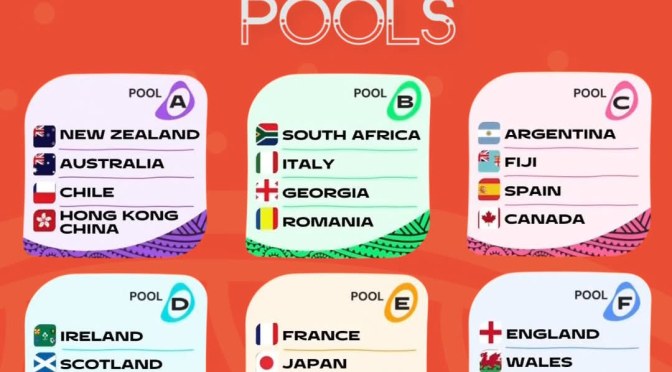
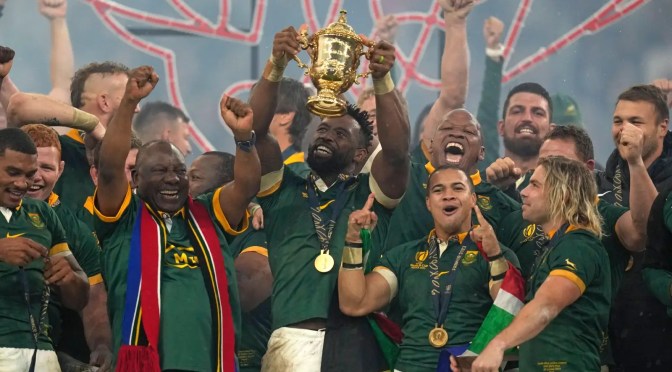
The Rugby World Cup draw took place last week, and the ‘big players’ have been dispersed across the Pools. The All Blacks and Wallabies meet for the first time in World Cup history in a round-robin match as the heavyweights of Pool A. South Africa and Italy headline Pool B; Argentina & Fiji in Pool C; Ireland & Scotland in Pool D; France & Japan in Pool E; and finally, England & Wales in Pool F. However, it is hard to go against the Springboks achieving a record fifth Webb-Ellis Trophy to make it three in a row under the leadership of Siya Kolisi.
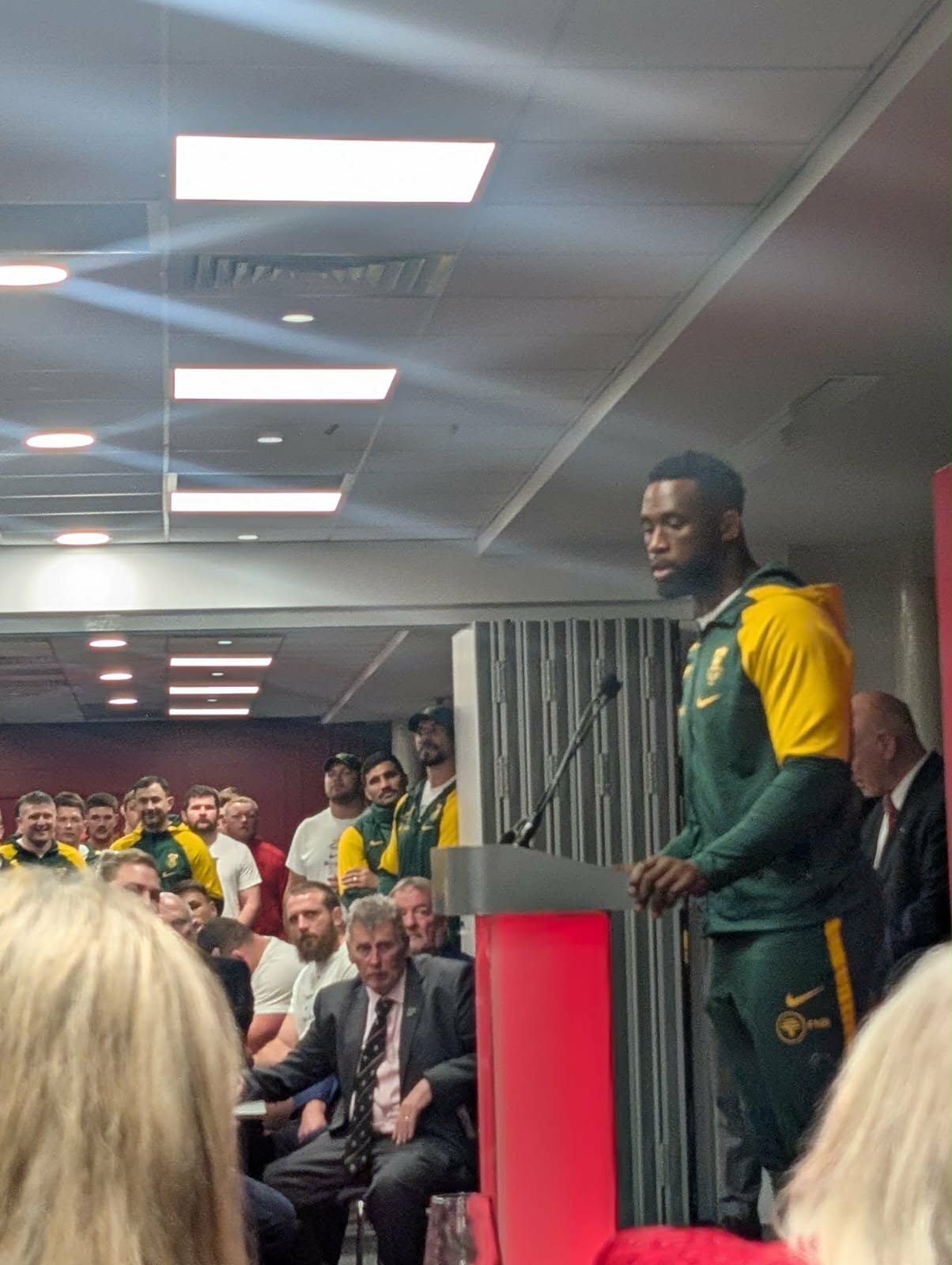
Siya Kolisi addressed the media in Cardiff. Courtesy of Brisbanerugby.
According to the World Rugby rankings, the round of 16 would mean that the Top two finishers in the six Pools, plus the next four teams placed after the round-robin stage. The eight winners would progress to the knockout stage.
The opening match will be held in Perth, likely between the hosts, Australia and New Zealand, to a record sold-out crowd. This will mean that these two teams won’t meet again until the final in Sydney. The All Blacks will have to negotiate a tough semi-final against the Springboks, while the Wallabies will have to overcome a mighty English side.
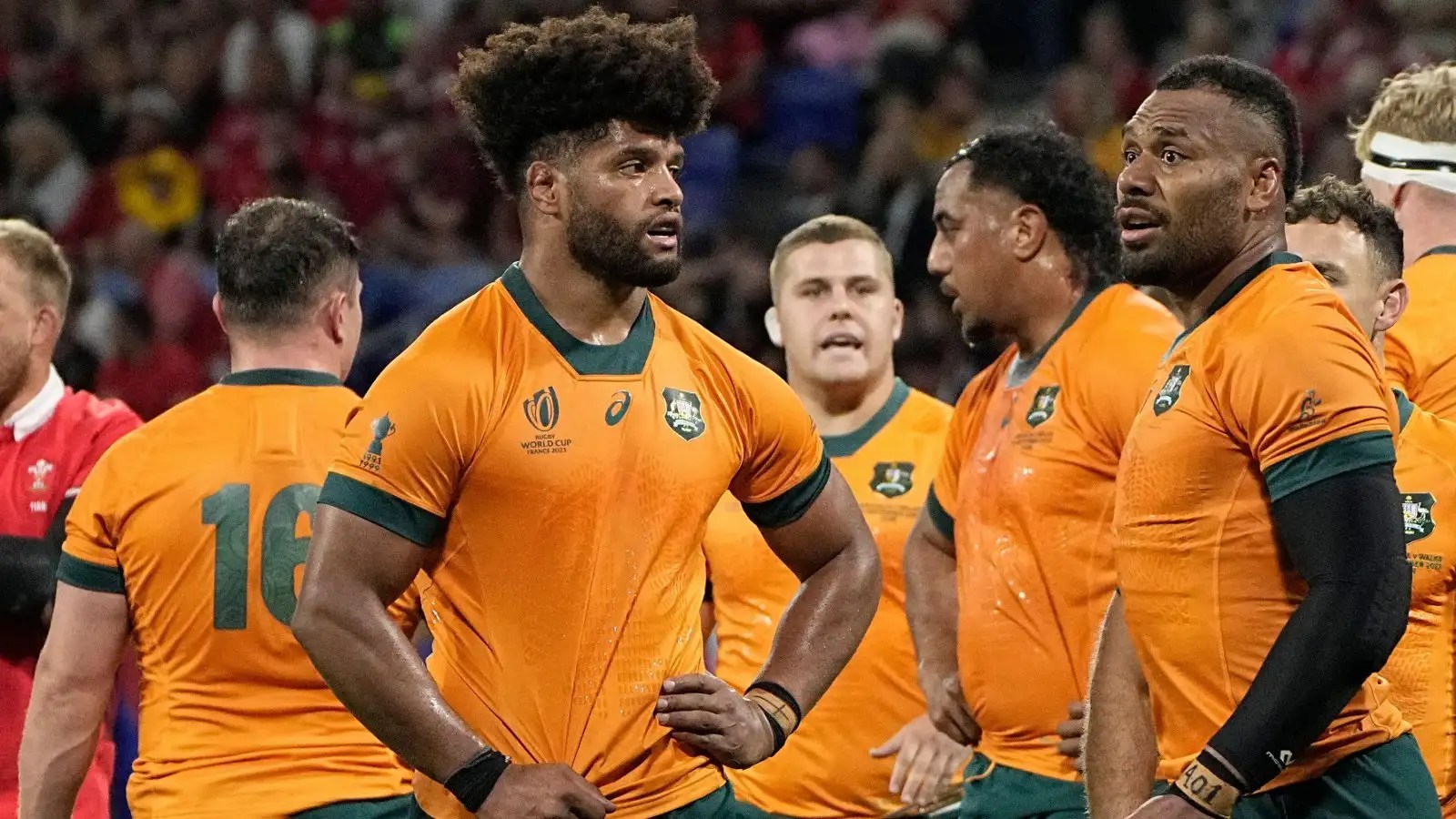
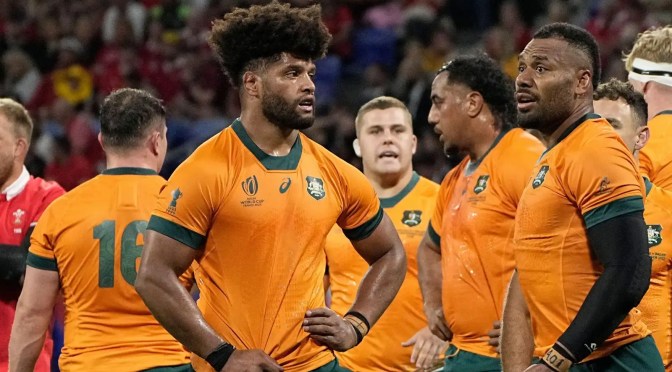
Wallabies in France at RWC 2023.
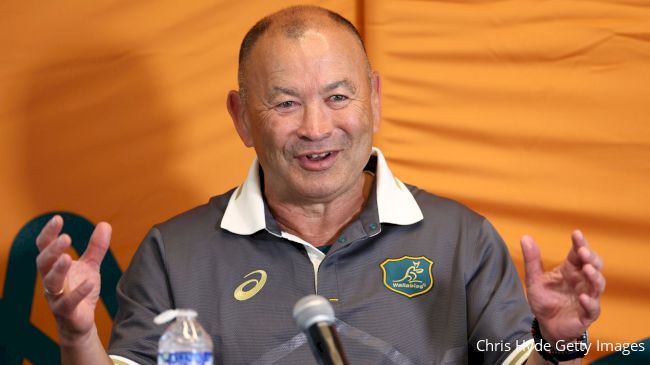
The Wallabies will have to play Japan in the quarter-final, a team they only managed to beat 19-15 at Tokyo’s Kokuritsugyogijo Stadium on October 25th this year. Eddie Jones’ men will be up for the challenge, possibly trying to replicate their RWC 2015 win over the Springboks in the Miracle in Brighton, arguably the greatest upset in not only Rugby World Cup history, but sport in general.
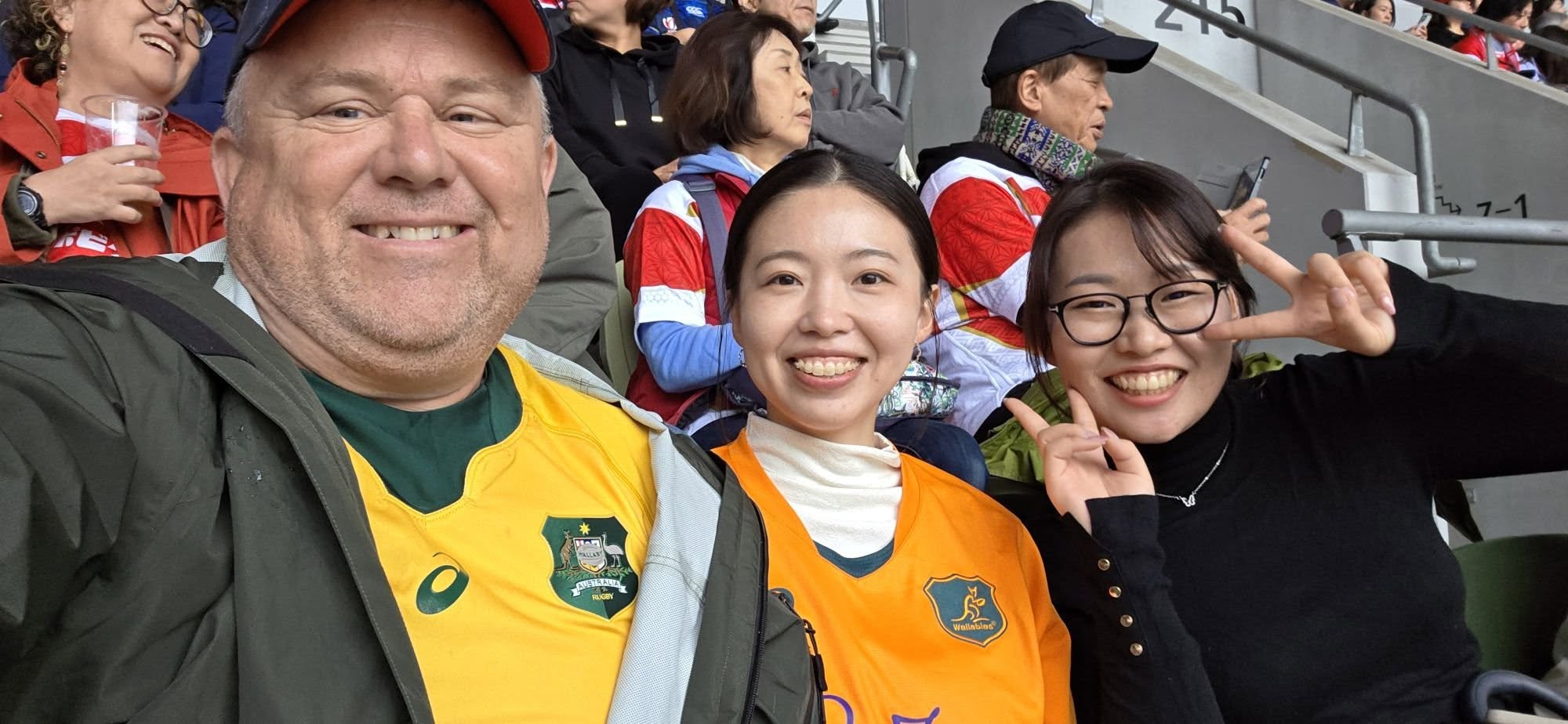
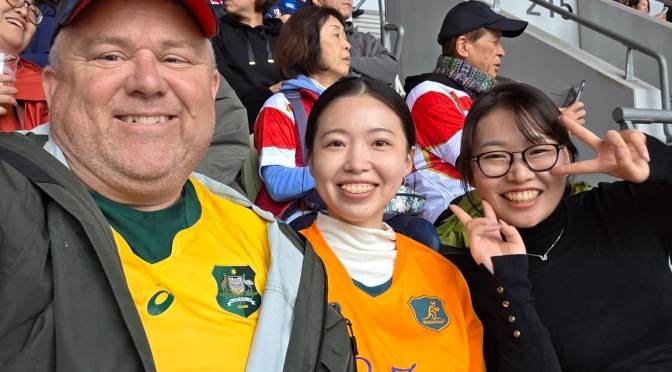
CJ in Tokyo at the Olympic Stadium. Courtesy of @brisbanerugby on Instagram
RWC 2027 is set up for the greatest contest in Rugby World Cup history, and the permutations will be studiously studied by the coaching staff of each participating nation, none more so than the mercurial Eddie Jones. Bring it on!!
Earlier this year, when I saw that the Wallabies had a fixture against Eddie Jones’ Japanese side in Tokyo on the 25th of October, a plan was activated. It had been six years since my last visit for the RWC2019, and that was such a brilliant tournament, a testimony to the hospitality or “ometenashi” of the Japanese people. I booked a flight, organised accommodation and made an itinerary to maximise my time rediscovering a land where I lived for five years in my 20s.
Tokyo Olympic Stadium, or “kokuritsukyogijo”, was where the RWC2019 final was supposed to be played; however, due to oversight, the stadium wasn’t ready in time, and Yokohama Stadium was used instead. The stadium did host the delayed 2020 Olympics in 2021 (a great Trivial Pursuits question). A healthy crowd of 46,000 people sat comfortably in the cavernous 80,000-seat stadium while the match was played out on a rainy day in Tokyo. Joe Smidt’s experimental Wallaby side struggled to penetrate the well-drilled Brave Blossom’s side back under the tutelage of local hero, Eddie Jones. Wave after wave of forward runners were thwarted by the tenacious Japanese, and it was only a skilful interchange of passing that saw Josh Flook slip through for a try. The Aussies managed three tries in an underwhelming performance to start their spring tour to the Northern Hemisphere, only scraping home 19-15. The crowd favourite, Michael Leech, was immense, and his name was called out every time he touched the ball.
To say Japan is not a rugby-playing nation is a gross underestimation of her success. Following the ‘Miracle in Brighton’ at the 2015 Rugby World Cup, where the tenacious Brave Blossoms, under Eddie Jones, orchestrated one of the biggest upsets in not just rugby history, but all sports, where they took down the might Springboks in the dying seconds to win 34-32, saw a resurgence. Hosting the 2019 reiteration, they managed to beat Scotland and Ireland to claim top spot in their Pool and make the quarter finals for the first time.
Rugby union in Japan is a major part of the Japanese sporting landscape. While it may not catch the eyeballs of baseball or even the J-League soccer, it still has a rich history. A lot of Wallabies, Springboks and All Blacks ply their trade in Japan and get paid a healthy salary for their effort. We’ve seen the likes of Michael Hooper, one of the highest-paid Wallabies of late, have a sabbatical over there at the back end of his career. Noah Lolesio is over there now preparing for the League One, which starts shortly.
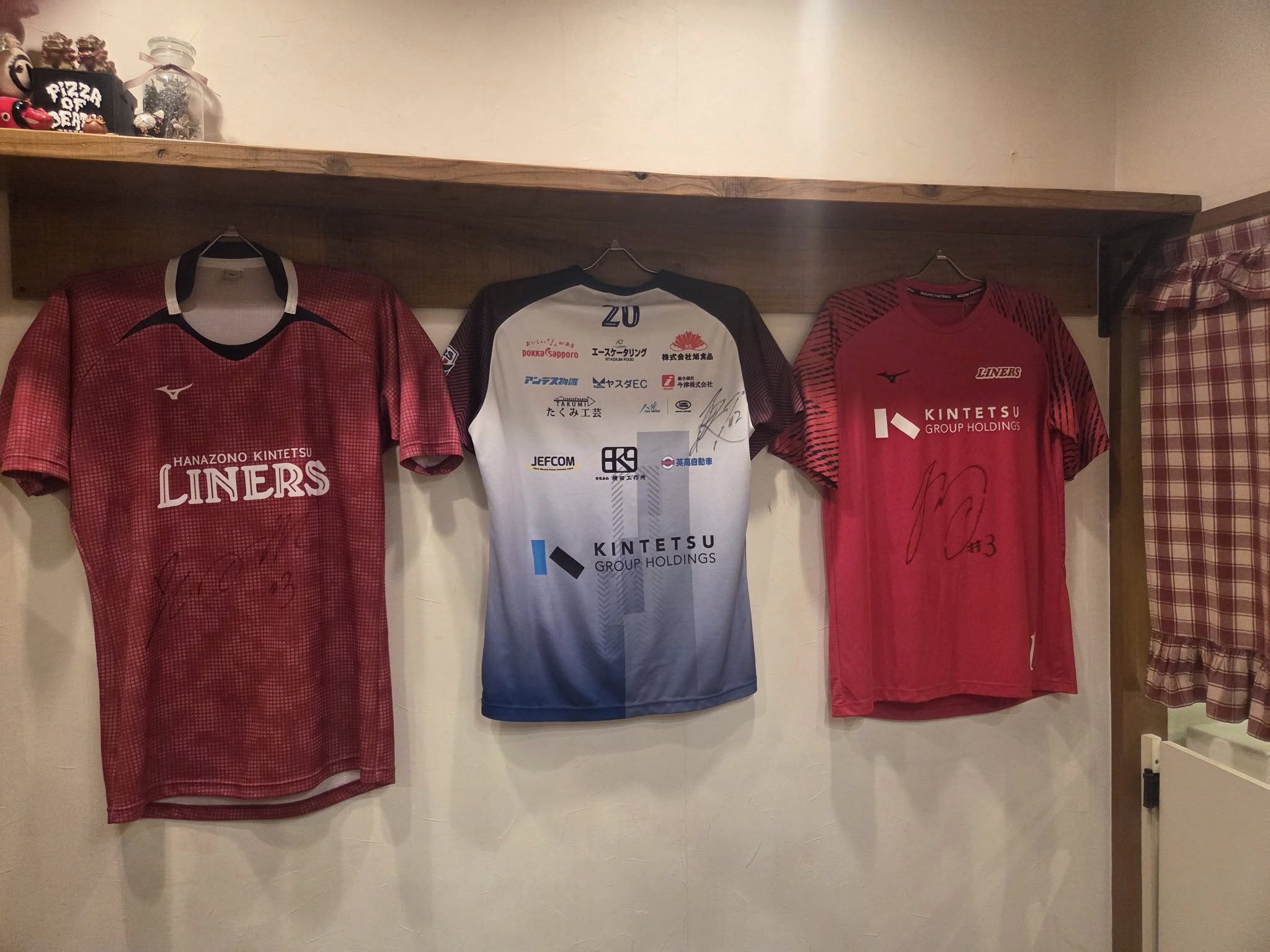
The Kansai region in western Japan is a fertile ground for rugby. The mighty Kobe Steelers have been a dominant force in Japanese rugby over the years. Wallaby legend Ian Williams played for them in the 1990s to great success, and of late, Dan Carter has led them to premierships. But it was in eastern Osaka where I found a rugby heartland at Hanazono, the Kintetsu Liners, coached by Will Genia and Quade Cooper, who had also played for them for several seasons.
To sum up my 17 days in the Land of the Rising Sun would be to say it was awesome. I had forgotten the generosity and hospitality of the Japanese people. Six years is just way too long. With Japan being part of the new Nations Cup of rugby, it will be sooner rather than later that I get back there.
So the 2023 Rugby World Cup has been decided in Paris by one point between two giants of the rugby world in South Africa and New Zealand. As the rain came down at Saint-Denis the Springboks went about their business of acquiring points through the boot of Handre Pollard to be up 12-6 at half-time. The only points in the second half was an unconverted try by Beauden Barrett that left the All Blacks one short at the end to lose by the slimmest of margins, 11-12.
After seven weeks of intense battle, the two teams that had each won the tournament three times a piece, were left to fight the final battle. The Northern Hemisphere had said that the Southern Hemisphere were not up to standard, but some performances of Fiji and Argentina, in particular, were worth taking note of. Despite this, Australia performed badly losing to Fiji for the first time in 69 years and being thumped by Wales 40-6 in the Pool stages which meant they could not reach the knockout stages for the first time in World Cup history. A lot of the blame can be laid on the coach, Eddie Jones, for not preparing his young team to do better. As a consequence, he has resigned from his position.
However, the final came down to two teams that had lost one match each in their respective Pool matches. New Zealand lost to France, 13-27, and South Africa lost to Ireland, 8-13. Ironically, those matches were reversed in the quarter-finals where New Zealand defeated Ireland, 28-24, and South Africa defeated France, 29-28. While the All Blacks had an easy route over Los Pumas, 44-6, in the semi-final the Springboks did it much harder against a determined English side to win by a single point, 16-15.
It is a true testament that the Springbok team could galvanise under Siya Kolisi to win a fourth Webb-Ellis trophy, back-to-back champions. And not just the team as Kolisi says, “Our country goes through such a lot and we are that very hope that they have”. They had plenty of support in the crowd as well, none more so than tennis great Roger Federer whose mother is South African. Well done!
The ancient Roman city of Lugdunum (modern day Lyon) was where the Australian Wallabies met their Waterloo. And just as many martyrs have died in the various colisseums scattered throughout the city, the wounded Wallabies join this pile. Coming into the match against Wales they had suffered their first defeat in 69 years, 15-22, at the hands of their South Pacific cousins, Fiji. Being put to the sword with a 40-6 thumping by the Welsh, Australian rugby is at an all-time low and staring down the possibility of not getting out of their Pool for the first time in World Cup history.
The recriminations against their coach, the talismanic Eddie Jones, have already began with quarter-final positions not yet decided. If he did take a call from the Japanese Rugby Football Union (JRFU), to which he strongly denied, before the World Cup then the distractions before the important Wales match can be justified; if not then a really bad look from the Australian media. Rugby is based more and more around the coach’s instructions and if that trust is lost the team can become disorientated. This certainly looked the case when Samu Kerevi seemed to be the only Wallaby making any penetration in the first half when they had plenty of possession. Nothing they tried seemed to come to fruition and the Welsh defence was more than adequate to the task and kept the scoreboard ticking over every time they were down Australia’s end. Down 16-6 at half-time the Aussies were still in the fight, but poor judgement let them down and a masterclass by Gareth Anscombe meant the men from Gaul would be deserved victors in Lyon.
Many Wallaby fans had travelled over for the match but became disillusioned early when Gareth Davies scored in the 3rd minute and was subsequently converted by Dan Biggar. Biggar was substituted in the 12th minute by Gareth Anscombe who manged to knock over three penalties after missing the first to make the score 16-6 at the break.
CJ with Wallaby fan before the match.
The second half began as the first finished with an Anscombe penalty. By the time Nick Tompkins scored in the 48th minute the Wallaby supporters became subdued and the Welsh singing began to pick up. It was not a happy night to be wearing Green and Gold. The final score of 40-6 was a knife to the heart of diehard Wallaby fans and the possibility that they might night continue to the quarters unfathomable.
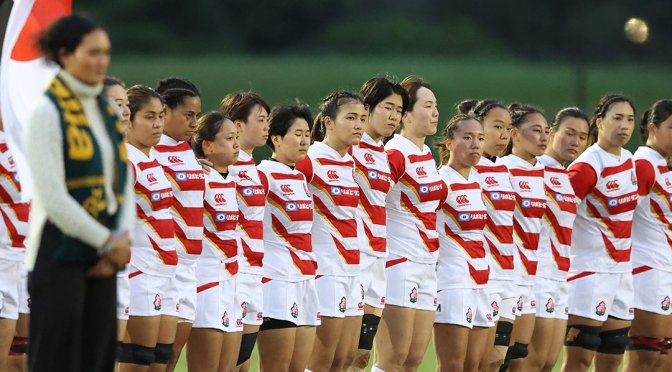
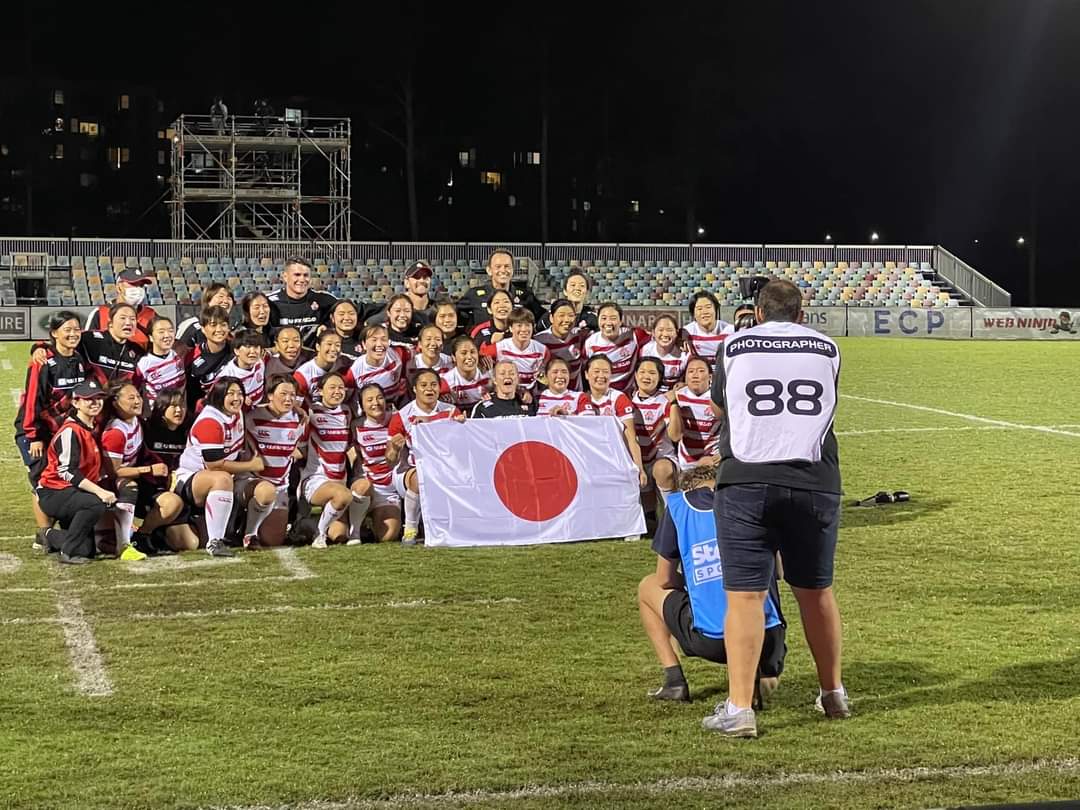
Last Tuesday night at Bond University on the Gold Coast the Japanese women’s rugby team, known as the Sakura 15, defeated the Wallaroos 12 to 10. Despite 10 personnel and positional changes due to COVID Tests on the eve the match, they were able to overcome their more fancied rivals.
The first half was dominated by the decidedly larger Aussie side in both scrums and lineouts. However, the tenacious Japanese side made their tackles and held them out to keep the score at nil-all going to the sheds.
@brisbanerugby on Instagram
In the second half it was No. 10 Ayasa Otsuka that kicked through a dropped ball by the Wallaroos in their own 22 to snatch a try in the 49th minute. She successfully converted her try to put the Sakura 15 ahead 7-0.
The Wallaroos continued to work the ball downfield and off a rolling maul, Ashley Masteri, was in for the Aussies first score. The Sakura 15 put some good phases together and eventually put Kyoko Hosokawa in to extend their lead to 12-5. However, the Wallaroos were not going to give in and Adiana Talakai managed to cross out wide. Once again Lori Crammer missed the conversion so the score remained 10-12. Crammer had an easier penalty shot in the 79th minute to steal the match for the Wallaroos, but was unsuccessful. Crammer’s 0 and 3 with the boot proved decisive for the home team.
Courtesy of Japan Rugby Football Union.
The short turnaround from Friday night’s 36-19 demolition of Fijiana at Suncorp Stadium was no excuse for Jay Tregonning fielding the same 23. The last time the two sides met on the 19th of July, 2019, the Aussies won 46-3 after beating them 34-5 on the 13th of July, 2019. The only other time the two side have met was the 17th of August, 2017, at the Rugby World Cup in Ireland where the Wallaroos were also victorious winning 29-15.
It was history making on the Gold Coast for the Sakura 15 with plenty of Japanese in the crowd. This bodes well for their campaign for the Rugby World Cup in New Zealand later this year in October/November.
If reports out of France are true it’s au voire to Kurtley Beale as they will pay for his retirement through French Club Racing 92. Good riddance I’d say as he’s well past his use-by date, costing us a semifinal berth at RWC2019 last year. I know he had to go along to Cheika’s Waratahs swansong in Japan as reward for winning the Super Rugby title in 2014; though when is enough enough? I still remember how he lined up for that unmissable final kick at Lang Park in 2013 to defeat the British & Irish Lions in Game 1; what a disgrace. He may have slotted that 50m+ bomb at Loftus to break a Wallaby drought of wins on the high veldt, but that British & Irish Lions debacle was a bridge too far. Giving him the captaincy at the weekend didn’t change a thing, Kurtley is still Kurtley Beale; when he’s good he’s very very good, but when he’s bad he’s awful.
I said it before, and I’ll say it again. “There’s a lot to like about the Reds of 2020”. With James O’Conner nursing an ankle injury, Brad Thorn gave BrisbaneRugby favourite son, Izaac Lukus (pictured with CJ), a licence to thrill in the No. 10 jersey and he didn’t disappoint. Up against All Black pivot Richie Mo’unga he was not afraid to take on the champion defence. The most successful team in the 25 years of Super Rugby were unsure of how to take the young Queenslanders; they even looked rattled in attack. Thorn knows how well they prepare at home, being a past Crusaders player himself, so he would have been delighted with the narrow loss. My daughter even noted the 20-24 loss saying that the Reds must have been ‘aweful’ and I informed her that the Reds actually scored 4 tries to 3; leaving 8 points on the field.
Along with my Souths Rugby Club compatriot, Andrew Slack, I was equally concerned why the rotation policy had meant that live-wire halfback, Tate McDermott. wasn’t in the run-on 15 for this must win clash. They opted for Samoan halfback, Scott Malolua to have over an hour of game time. Admittedly, Lukan Salakai-Loto showed his rest from the starting 15 last week earned him Green & Gold MOM this week.
Timely return to Ballymore for English kicking guru, Dave Alred. The Kiwis can, South Africa can. How good would it be to have a Leigh Halfpenny, a Dan Bigger or even Owen Farrell all banging over 100% at Twickenham over the weekend in their Round Four clash. Three tries a piece but the scoreline read England 33-30 over Wales. It’s what makes the Guinness Six Nations so attractive to corporate sponsorship. Game management by England was key to their weekend win and another Triple Crown. Raelene Castle should be checking Eddie Jones’ contractual arrangements, to try to get him back in time for France 2023 World Cup. (Full report of Six Nations RD #4: https://wordpress.com/read/feeds/77206314/posts/2617244225)
With Andrew Twiggy Forrest’s Global Rapid Rugby speeding up the game with shorter halves. Alan Jones wrote in The Australian on Friday about extending the time, allegedly to account for ‘time wasting’ with scrums. As with The Australian’s Rugby Editor, Wayne Smith, I too was intrigued by the novel concept of extending the halves by 5 minutes to match football, ie. soccer.
Aussie 7s in Vancouver were unlucky to go down 14-17 to the NZ 7s in the HSBC Sevens Series Cup final. Aussie 7s haven’t beaten the Kiwis in a 7s final since Brisbane 2002.
Well technically not, as it’s only the third biggest global sporting event. A mere 20 nations qualifying after an exhaustive elimination process, however, the tournament is three times longer at six-weeks and 12 venues from Hokkaido to Kyushu. The influx of foreign invaders will be the greatest since Commodore Perry’s arrival in 1853 at Shimoda.
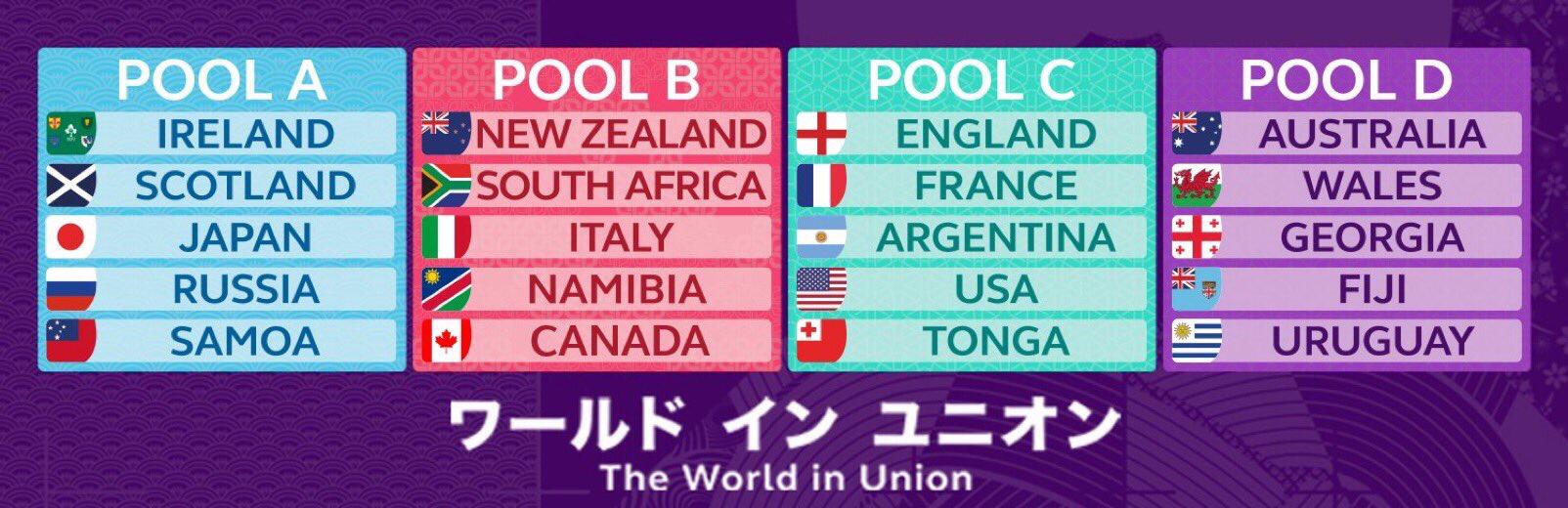
The four Pools of five competing for a place in the knockout series.
Perennial favourites the All Blacks from New Zealand will be looking for an unprecedented three-peat, having won the last two incarnations in 2011 & 2015. Although, Ireland will go into the tournament as World No. 1, due to the quirky World Rugby algorithm that determines placings. Never before have the ‘Men in Green’ made a RWC Final, although their Quarter-Final match against RWC1991 winners, the Wallabies, at Landsdown Road will go down as ‘the one that got away‘.
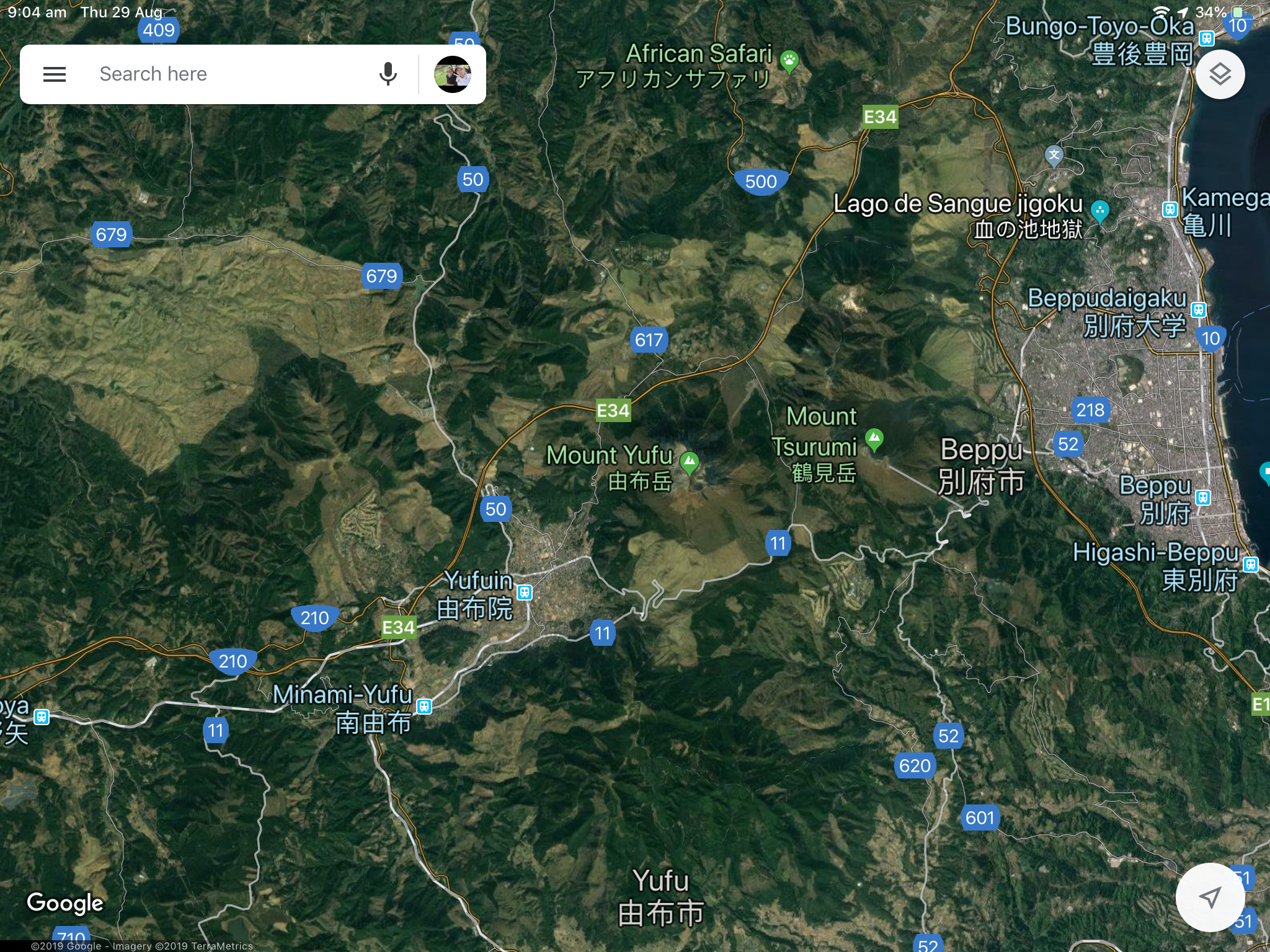
The teams descending on Japan, somewhat delayed due to Typhoon Faxai, should be embraced by the Japanese populous along with the tsunami of international supporters. Rugby people are a different breed: beer-swilling aficionados as opposed to football (soccer in the English speaking world outside of England) hooligans. They will appreciate the culture, the ceremonies, the nature and the history that abounds there; as well as the onsen or hot springs, the most renowned are found in Beppu, Kyushu; with matches played in Oita, including two very important quarter-finals, these are a must-see (map below).
Visiting Japan 12 months out from the Rugby World Cup I got a sense that the ‘general’ Japanese population were somewhat unaware of the tournament. When questioned they would reply with, “Tokyo 2020?” Just last week at a theme park on the Gold Coast some university students visiting from Japan on their summer break in Australia looked puzzled when I said I was going to Japan for the Rugby World Cup (admittedly, they were from Ibaraki Prefecture, an hour or so north of Tokyo on the Joban Line, where no matches are being played). Also in Australia, when people ask why I am going to Japan the response often is, “Do they play rugby in Japan?”
Undoubtedly, when RWC2019begins this Friday at Ajinomoto Stadium the vast majority will get on board. Not everyone is a diehard rugby fan, but when a spectacle such as the Rugby World Cup is on your doorstep you can be assured that the populous will respond and Japanese ‘omotenashi‘ (hospitality) will come to the fore. At the 2015 tournament, 25 million in Japan tuned in to watch Japan v Samoa on their television sets, so the interest is there. The other takeout from that tournament held in the UK was the 34-32 last-minute win over the Springboksby the Japanese Brave Blossoms; recreated in cinema with the just-released “Miracle in Brighton“.
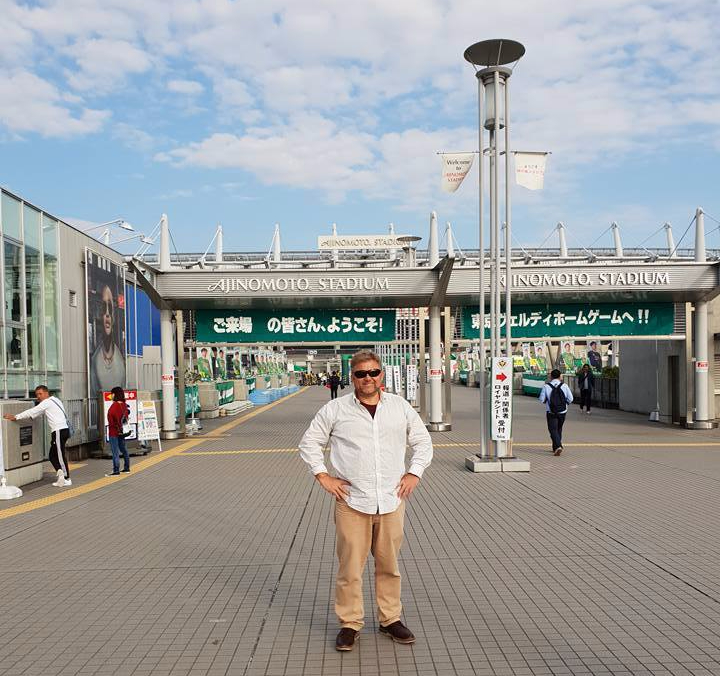
CJ last year at Ajinomoto Stadium, Tokyo.
Rugby Union has a long history in Japan dating from 1866 in Yokohama and, while being more popular in the universities, the company based Top League has started to attract larger crowds. Unfortunately, Japan’s Super Rugbyteam the Sunwolves will be axed from the competition after the 2020 season, though I’m sure their company based Top League will eventually open up to international teams from Hong Kong and Perth (convincing the JRFU will be a challenge, though).
All and all this bodes well for a spectacular tournament that I am very much looking forward to attending. 楽しみですネ‼
The audacity of Israel Folau to launch a ‘Go fund me’ page in an effort to raise $3 million to fund his legal battle against Rugby Australia is bewildering, to say the least. Let’s not forget that it was Israel Folau who made a Homophobic Social Media post which led to Folau’s sacking by Rugby Australia. Whether Rugby Australia was justified in sacking Folau or not will now be decided in the Courts, but for Folau in effect to ask the Public to fund his Legal case is a sad indictment of where Folau is now at and the poor advice that he is receiving. It would appear that Folau has conveniently forgotten what he wrote last year when he stated that if he was “hurting Rugby Australia, it’s sponsors and the Australian Rugby Community to such a degree that things couldn’t be worked through – I would walk away from My contract, immediately” (Players Voice, 2018).
Some former Wallabies greats Mark Gerrard and Drew Mitchell, in particular, have come out and slammed Folau for his plea for fans to fund his Legal action to the extent that Mitchell posted the following on Twitter.
“YOU are in a fight that YOU chose to be in after YOU broke the terms of YOUR contract, the kids below are in a fight they NEVER wanted to be in & yet YOU think YOU deserve donations more than they do?!!”
Mitchell was referring to a ‘Go Fund Me’ page set up to help a child with ‘Neuroblastoma’.
Folau has now caused a deep divide in the Australian Rugby Community and hurts a lot of people across all walks of Life, the questions that have to be asked are, was it all worth it and is Israel Folau his own Man, or is he being driven and guided by his Father?
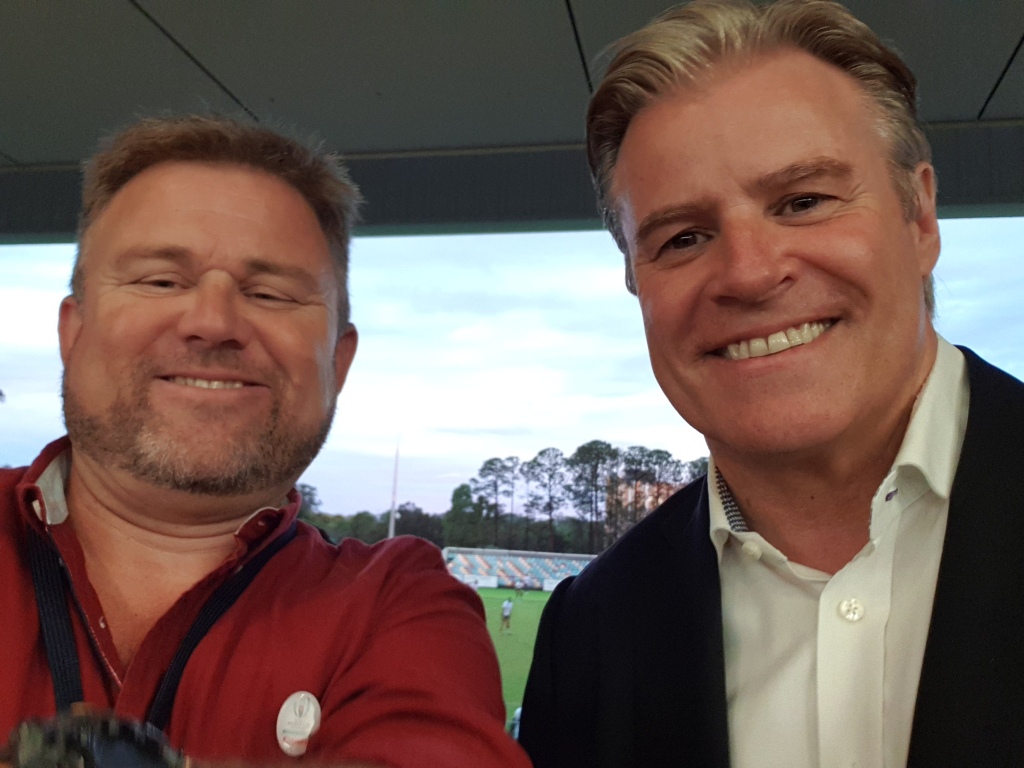
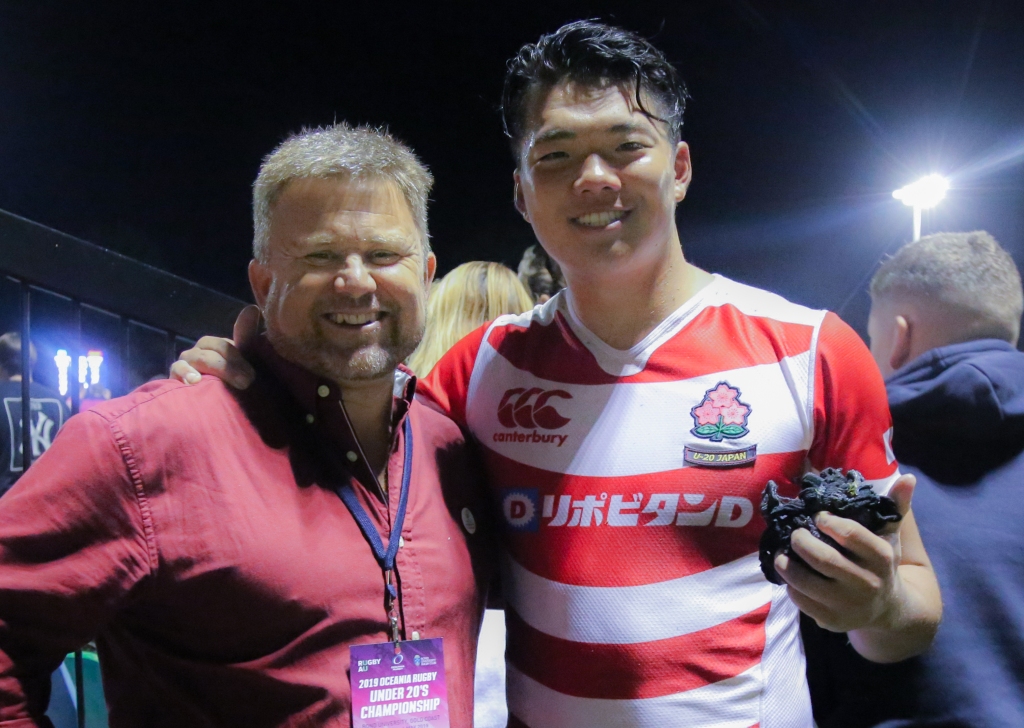
On only the fourth day of the new Japanese “Reiwa” Era the U20s final day was upon us. In slight overcast conditions the Japanese took on Fiji at 5pm. Perched up in the Bond University stands with World Rugby CEO, Brett Gosper, we were treated to a fast entertaining match to open the final day of proceedings of the 8-day Oceania Rugby U20’s Championships on the Gold Coast. Despite a distinct size difference, the Japanese were tenacious matching the Fijians to hold them to a one-point lead, 28-27, by the halftime hooter, with their scrum a dominant feature of the half. This scrum ascendancy wreaked havoc shortly into the second stanza garnishing an early penalty for Japan to re-take the lead, 30-28, before eventually succumbing to the South-Pacific Islanders to go down 59-37 by the end of the 80 minutes in a high scoring encounter.
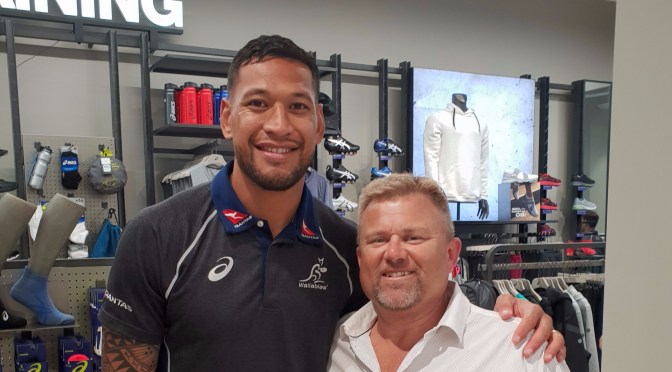
CJ with World Rugby CEO, Brett Gosper. Photo courtesy of CJ@brisbanerugby.com
Photo: David Kapernick @brisbanerugby.com
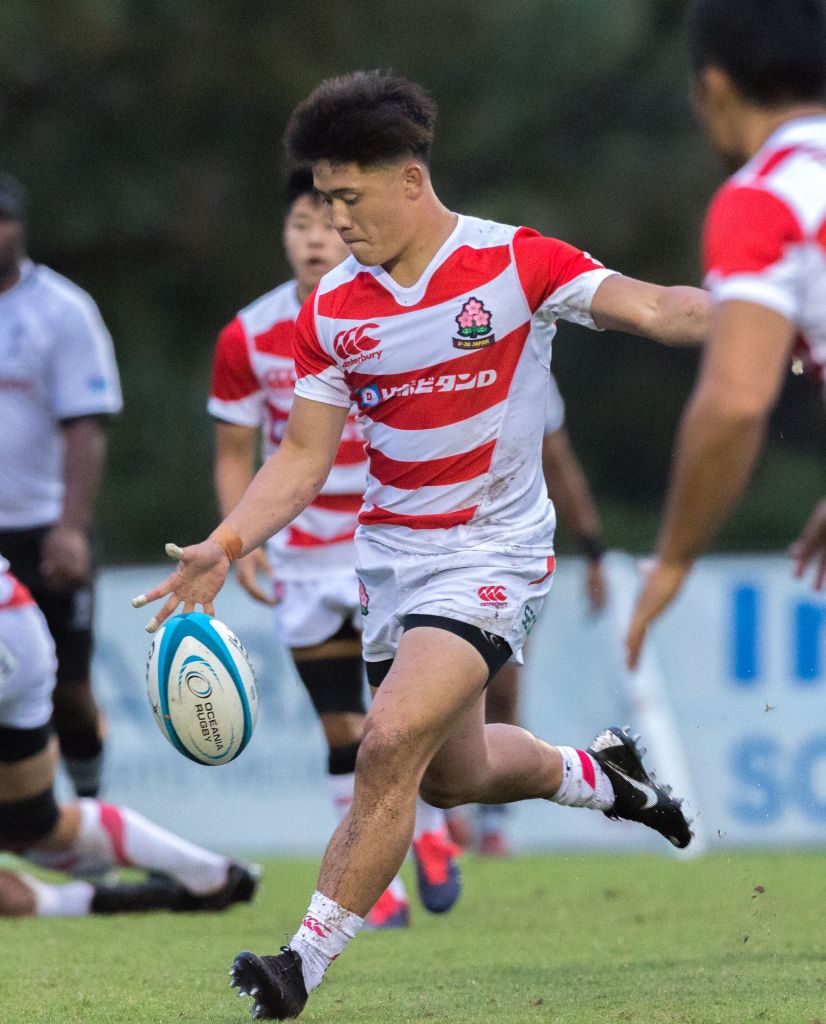
Japan’s No. 10 Rintaro Maruyama. Photo David Kapernick @brisbanerugby.com
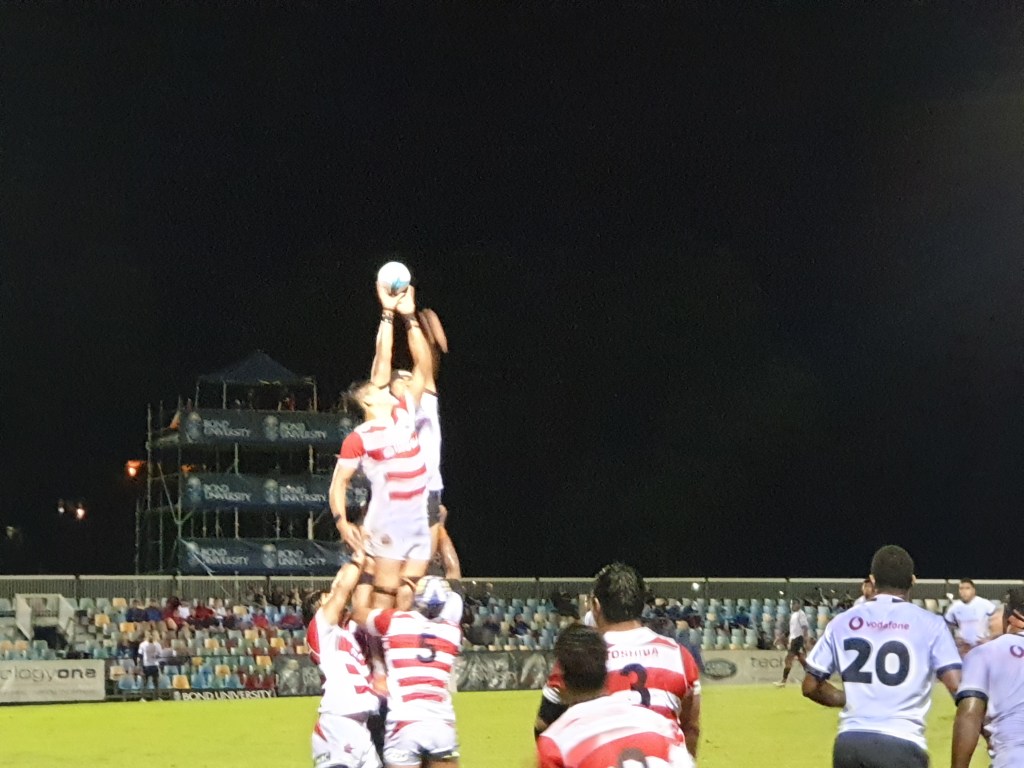
The strong crowd of 2000+ were spellbound by the pace of the first match of the evening with the Japanese captain, Shota Fukui, showing why he is a part of the Robbie Deans coached Panasonic Wild Knights by scoring in the 6th minute off a line-out drive 5 meters out, and mercurial fly-half Rintaro Maruyama’s conversion had the men in red & white taking the early lead 7-0 over their more fancied Pacific Island counterparts. Not to be outdone, two minutes later smart Fijian halfback, Josh Akariva Isaiah Vutu, was in under the posts after taking a quick penalty tap to equalise the score at 7-all. By the 13th minute Fiji was in again with inside-centre, Ilaisa Droasese, stepping through the bamboozled Japanese back-line to cross the paint putting Fiji ahead, for the first time in the match, 14-7. However, the dominate Japanese scrum forced a pushover try to impressive Japanese No. 8, Takamasa Maruo, and this dominance continued for ever present Captain Fukui to bag a double to see the Rising Sun team back in the lead, 19-14, halfway through the first stanza. Two tries to Fiji flanker, Vilive Miramira, which were both converted put them in a commanding position at 28-19; not before Maruo made a break off a Fijian mistake on attack from his own side of halfway and showing a clean pair of heels, raced 60 meters for his double on the stroke of halftime to take his team to the sheds down only 28-27.
Halftime scoreboard. Photo CJ@brisbanerugby.com
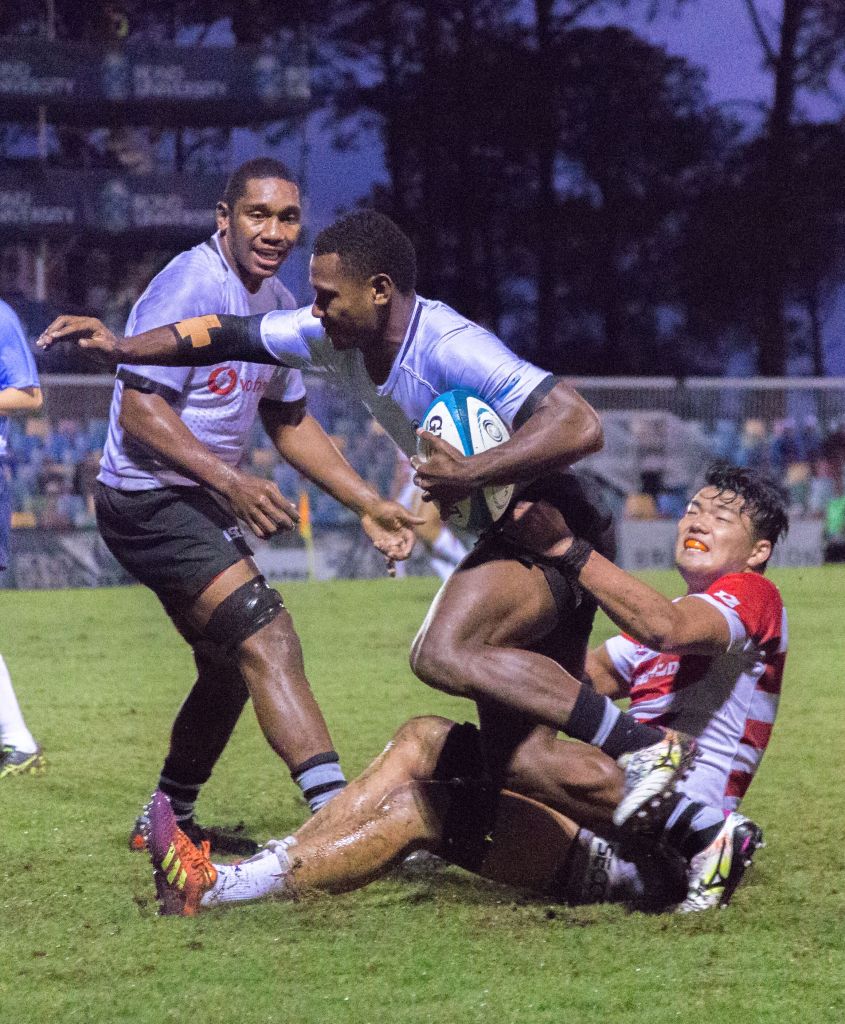
Japan Capt., Shota Fukui, tackling Fiji’s fullback RATU OSEA WAQANINAVATU . Photo David Kapernick@brisbanerugby.com
Only a few minutes into the second half, the Japanese scrum ascendancy forced Fiji to transgress on their feed as the No. 8, Aminaisi Tiritabua Shaw, was stood up, allowing Japan’s No. 10, Maruyama, to slot the penalty goal from 35 meters out to put Japan ahead 30-28. Despite the fearless Japanese defence and their scrum superiority, the Fijians ran in four unanswered tries, firstly through speedy fullback Ratu Osea Waqaninavatu in the 51st minute followed by both wingers, including a double to Osea Joji Natoga, to stamp their mark on the match going ahead 52-30 with only 10 minutes left on the clock. Japan’s industrious No. 8, Maruo, was not finished troubling the scorers with his hat-trick try from a quick thinking tap in the 73rd minute, combined with Maruyama’s successful conversion the score read 52-37. The coup de grâce came two minutes later with replacement Fijian hooker, Lino Mairara Vasuinadi, powering over. Final score 59-37. A very high scoring and exhilarating display that bodes well for the World Rugby U20 Championships in Argentina next month, June 4th~22nd.
“It feels really good. We came out a bit slow today, but then eventually we overcame (this) and we did the little things right. And the scoreboard tells it all.”
Fiji Captain, Tevita Ikanivere, after the match.
Japan U20s captain, Shota Fukui, was obviously upset by the valiant effort shown by his team and said, “I’m disappointed (of the loss), due to all the support we are receiving from people back in Japan.”
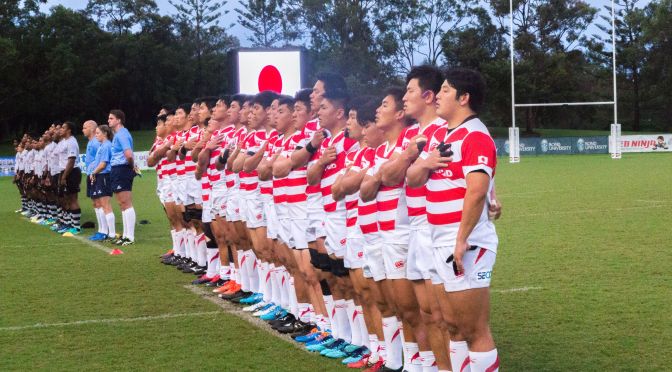
Japan U20 players up for the Fijian challenge. Photo CJ@brisbanerugby.com
CJ with Japan U20s Captain, Shota Fukui. Photo David Kapernick@brisbanerugby.com
With Japan being awarded this year’s Rugby World Cup, you could be thinking that the Japan Rugby Football Union (JRFU) would be going out of their way to promote the game. On closer inspection it looks like quite the opposite.
Firstly, the JRFU basically cancelled the Top League Competition for the 2019-20 season, replacing it with two mini tourneys in 2020. Then they told SANZAAR in March that they really didn’t think Super Rugby was the best way to develop the national side and now former Prime Minister, Yoshiro Mori, call’s for the JRFU to be reformed after announcing his shock resignation last week as the organisation’s honorary chairman. He is the man responsible for Japan hosting RWC2019.
Mori-san is not the only one at odds with the JRFU, as former Japan national coach, Eddie Jones, reiterated with Kyodo News in Japan, yesterday, his opinion regarding the JRFU allowing the Japanese side the Sunwolves to be disabandoned after the 2020 Super Rugby season.
“If Japan wants to be a top 10 country in the world, which they do, they need their players to be prepared,” the current England coach, Jones, said.
“The purpose of the Sunwolves was to give opportunities for young Japanese players to prepare for test rugby, because ultimately like any rugby country you want your national team to be strong and your grassroots to be strong, and in between you work out the right structure.
“What Japan was missing was that opportunityfor younger players to go from a good domestic Top League into a higher level of competition without being exposed to test level, and the Sunwolves provided that opportunity. It hasn’t worked out for them and I think it is a massive opportunity missed.“
Eddie Jones speaking with Kyodo News’ Rich Freeman in Yokohama.
LONDON, ENGLAND – NOVEMBER 19: Eddie Jones the head coach of England looks on during the Old Mutual Wealth series match between England and Fiji at Twickenham Stadium on November 19, 2016 in London, England. (Photo by Richard Heathcote/Getty Images)
Remembering, of course, that Eddie Jones prepared the Japanese Team for the 2015 Rugby World Cup, so he knows what he’s talking about. Putting his chargers through a somewhat grueling experience on Japan’s southern island of Kyushu ahead of that tourney, they certainly reaped the glory with their win at RWC2015 in Brighton. To overcome the might of South Africa’s Springboks at rugby’s showcase tournament is the story of legends and a movie under the title of, ‘Miracle in Brighton,’ is already underway.
Japan’s Brave Blossoms celebrate their 34-32 victory over South Africa at RWC2015. Photo courtesy of Getty
World Rugby Chairman, Bill Beaumont, has used the World Cup in Japan to promote rugby throughout Asia with a target of one million new participants. In December last year, Beaumont announced that this target has been achieved at a special event celebrating 50 years of Asia Rugby in Bangkok.
While the vast majority of those numbers have been in Japan, about 460,000. Many of which have been involved in one off tournaments such as the one I attended at the YC&AC grounds last September in Yokohama run by Australian Peter Gibson called the “Hero’s Cup” with former Japan captain Hitoshi Ono.
CJ with Japanese rugby legend Hitoshi Ono at an Aussie Beef rugby tournament at YC &AC
According to veteran rugby scribe in Japan and good friend, Rich Freeman, the inflated numbers for Japan are not telling the true story. As rugby numbers are actually on the decline.
“In the present way it’s structured it just doesn’t work. Schools are losing rugby clubs big time,” Freeman says.
“Rugby is struggling, especially at school level, so they’re going to have to change the way it’s structured.”
The main problem is that there are no consistent pathways, unless your child attends a rugby school and that is the only sport they are allowed to play 330-340 days a year. Those that don’t attend are going to feel left out after the World Cup with nowhere to play rugby.
“You’re going to have all these young kids saying, ‘Wow, I watched Beauden Barrett play and he did this, I want to play,’ but unless there are more clubs like Koji’s (Tokumasu) Shibuya Rugby Club, where are they going to go?”
Koji Tokumasu runs the Shibuya Rugby Club which is one of only a few clubs introducing Tokyo kids to the sport through tag rugby. He is a senior director for #RWC2019 organising committee and says the JRFU needs to pick up it’s act.
“Every Sunday we have over 300 under 12’s playing tag rugby and even if they don’t have the opportunity to play at school they can play at our club. I’m hoping and confident that will increase, so the Japan Rugby Union and schools should be prepared to open the door when this happens.”
The urgency for exposure is apparent with only six months before the Cup kicks off at Tokyo Stadium (Ajinomoto Stadium) on September 20th with Japan hosting Russia in Pool A. Many people I talked to in Japan last year were overawed by Japan’s success at the last World Cup in England four years earlier. Not just the win over South Africa, the match between Japan and Samoa achieved a television audience record of 25 million in Japan.
CJ at Ajinomoto Stadium last year.Courtesy of @brisbanerugby on Instagram















 Brisbane Rugby.com