Wallabies’ European Tour: A Season of Struggles

The Wallabies’ European vacation came to an end with a 48-33 loss to Les Bleus at Stad de France, just outside Paris in Saint-Denis. It capped off a season in which they won only five of their 15 tests, with memorable wins over the British and Irish Lions in Sydney and the mighty Springboks in Johannesburg.
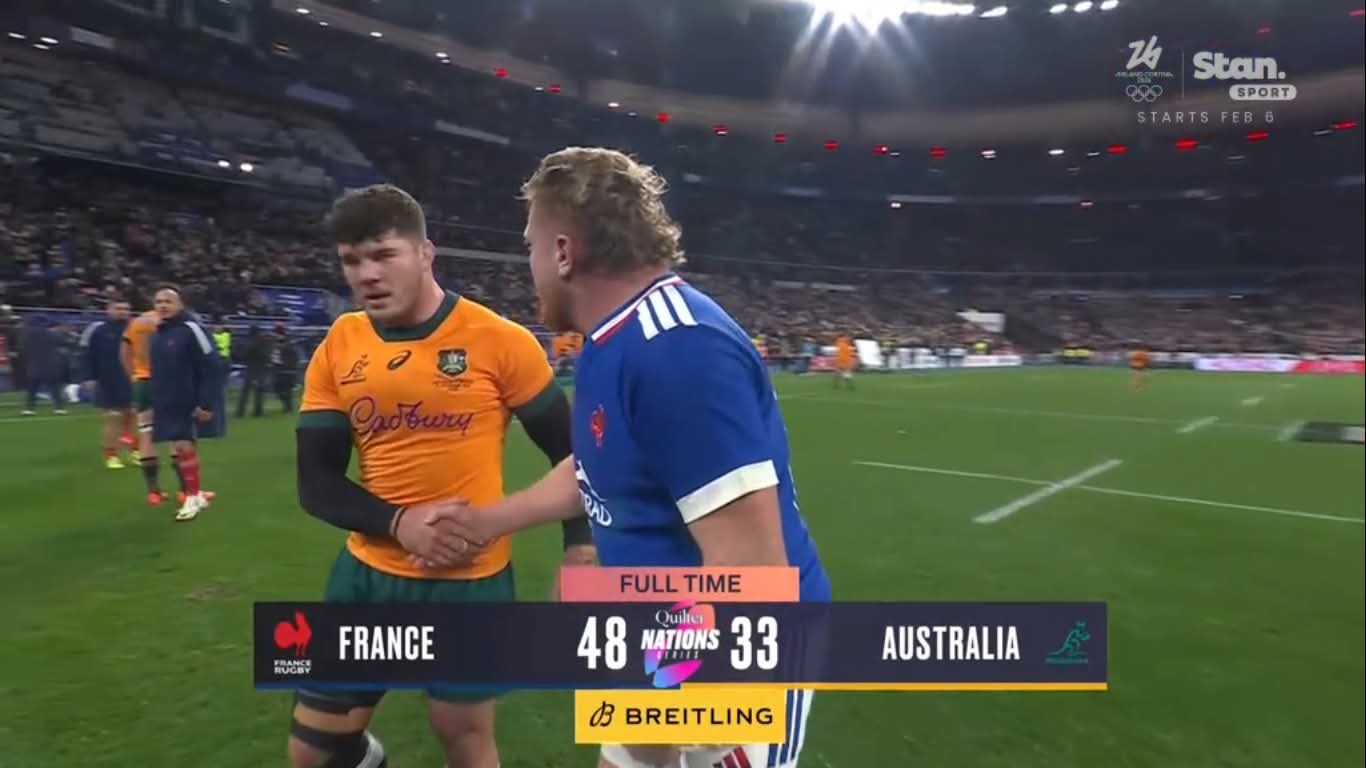
With a 19-all half-time score, including a double by Queensland Red Matt Faessler, the Wallabies were right in it. In fact, they were only trailing by one point, 26-27, at the hour mark before conceding three converted tries to go down by 15. A much-improved outing by Joe Schmidt’s men before Tom Hooper received a Yellow Card in the 65th minute, and the penalty count was mounting, 10 in the second half. John Eales Medalist Len Ikitau was the standout, with 15 carries. Angus Bell was immense, scoring a breakaway try in his 50th test, and Josh Nasser went over on debut. Also, congratulations to Queensland Reds’ halfback, Kalani Thomas, on making his Wallabies debut.

Their European campaign started off at Twickenham with a bruising 25-7 loss to England, followed by a loss to Italy, 26-19; ironically, all 5 tries were scored by Australians. Unfortunately, Luis Lynaugh and Monty Ioana were wearing the blue of Italy. They moved to Dublin, where it all unravelled, despite the in-and-out-again James O’Connor trying his best to go down to 3rd ranked Ireland 46-19. Against France, they showed attacking flair with Matt Faessler bagging a double and his front row partner, Angus Bell, crossing the paint in the first half to have it all locked up 19-all at the break. World Rugby player of the year nominee, Louis Bielle-Biarrey, broke the Aussies’ spirit with a brilliant individual try in the first half and helped, Man of the Match, Nicolas Depoortere to a double. Fabien Galthie’s men were too strong in the end to smash the Wallabies

It is the first time since 1958 that the Wallabies have gone winless on the European tour. However, technically, they did beat a spirited Eddie Jones-orchestrated Japanese outfit, 19-15, in Tokyo on the first leg of the Spring Tour.


Rugby in the Land of the Rising Sun

Earlier this year, when I saw that the Wallabies had a fixture against Eddie Jones’ Japanese side in Tokyo on the 25th of October, a plan was activated. It had been six years since my last visit for the RWC2019, and that was such a brilliant tournament, a testimony to the hospitality or “ometenashi” of the Japanese people. I booked a flight, organised accommodation and made an itinerary to maximise my time rediscovering a land where I lived for five years in my 20s.

Tokyo Olympic Stadium, or “kokuritsukyogijo”, was where the RWC2019 final was supposed to be played; however, due to oversight, the stadium wasn’t ready in time, and Yokohama Stadium was used instead. The stadium did host the delayed 2020 Olympics in 2021 (a great Trivial Pursuits question). A healthy crowd of 46,000 people sat comfortably in the cavernous 80,000-seat stadium while the match was played out on a rainy day in Tokyo. Joe Smidt’s experimental Wallaby side struggled to penetrate the well-drilled Brave Blossom’s side back under the tutelage of local hero, Eddie Jones. Wave after wave of forward runners were thwarted by the tenacious Japanese, and it was only a skilful interchange of passing that saw Josh Flook slip through for a try. The Aussies managed three tries in an underwhelming performance to start their spring tour to the Northern Hemisphere, only scraping home 19-15. The crowd favourite, Michael Leech, was immense, and his name was called out every time he touched the ball.

To say Japan is not a rugby-playing nation is a gross underestimation of her success. Following the ‘Miracle in Brighton’ at the 2015 Rugby World Cup, where the tenacious Brave Blossoms, under Eddie Jones, orchestrated one of the biggest upsets in not just rugby history, but all sports, where they took down the might Springboks in the dying seconds to win 34-32, saw a resurgence. Hosting the 2019 reiteration, they managed to beat Scotland and Ireland to claim top spot in their Pool and make the quarter finals for the first time.

Rugby union in Japan is a major part of the Japanese sporting landscape. While it may not catch the eyeballs of baseball or even the J-League soccer, it still has a rich history. A lot of Wallabies, Springboks and All Blacks ply their trade in Japan and get paid a healthy salary for their effort. We’ve seen the likes of Michael Hooper, one of the highest-paid Wallabies of late, have a sabbatical over there at the back end of his career. Noah Lolesio is over there now preparing for the League One, which starts shortly.

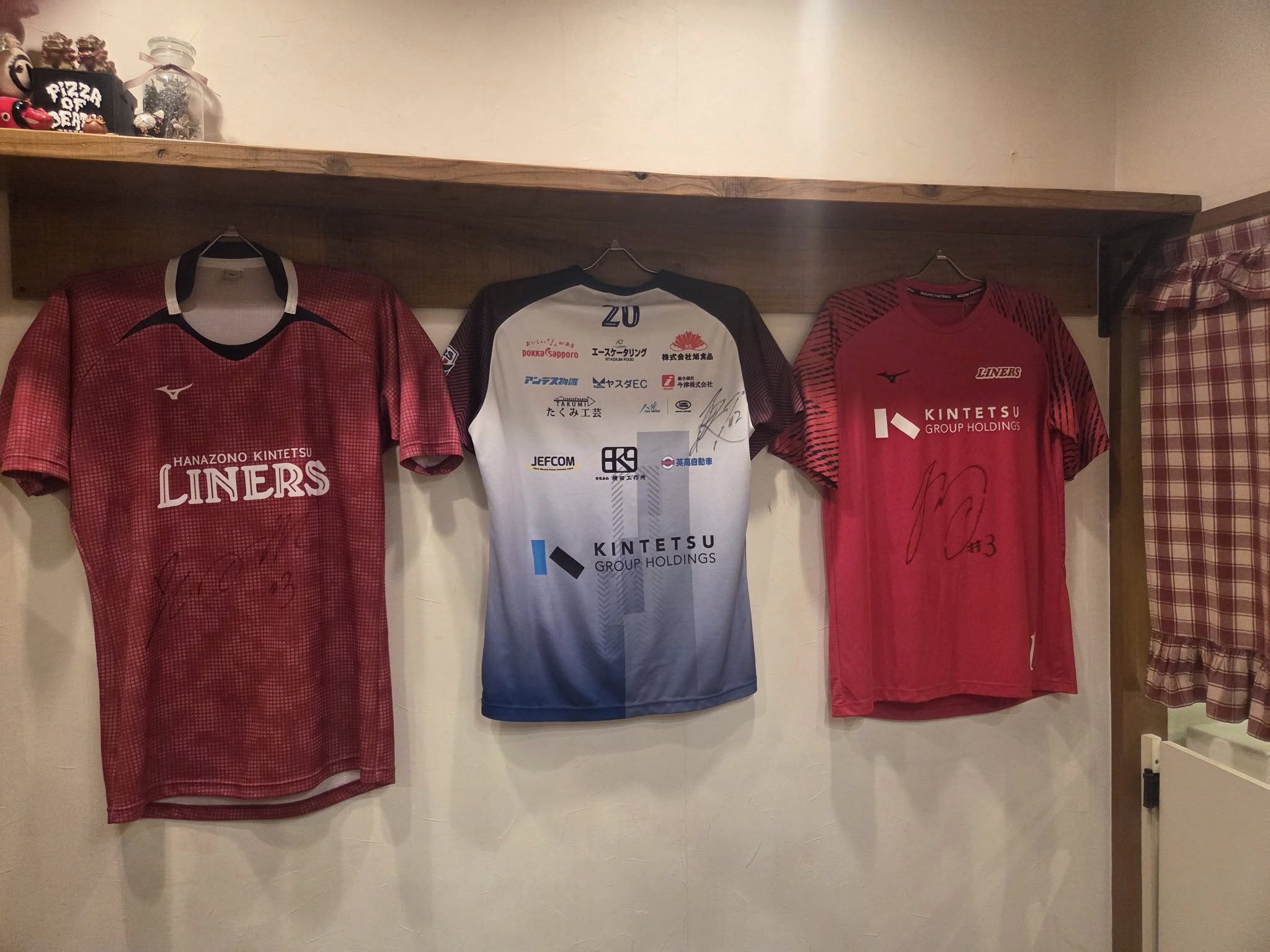
The Kansai region in western Japan is a fertile ground for rugby. The mighty Kobe Steelers have been a dominant force in Japanese rugby over the years. Wallaby legend Ian Williams played for them in the 1990s to great success, and of late, Dan Carter has led them to premierships. But it was in eastern Osaka where I found a rugby heartland at Hanazono, the Kintetsu Liners, coached by Will Genia and Quade Cooper, who had also played for them for several seasons.

To sum up my 17 days in the Land of the Rising Sun would be to say it was awesome. I had forgotten the generosity and hospitality of the Japanese people. Six years is just way too long. With Japan being part of the new Nations Cup of rugby, it will be sooner rather than later that I get back there.

本当にお世話になっておりましたお感謝します。