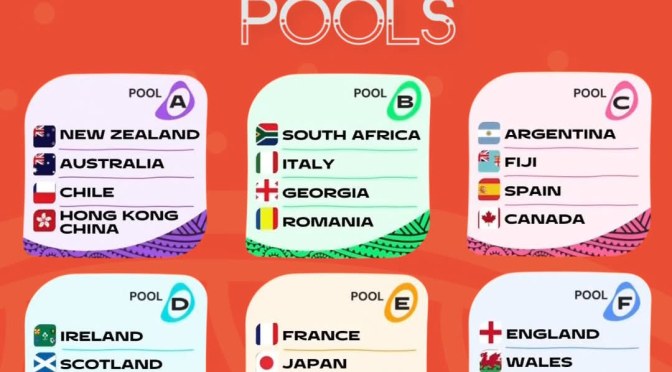
The Rugby World Cup draw took place last week, and the ‘big players’ have been dispersed across the Pools. The All Blacks and Wallabies meet for the first time in World Cup history in a round-robin match as the heavyweights of Pool A. South Africa and Italy headline Pool B; Argentina & Fiji in Pool C; Ireland & Scotland in Pool D; France & Japan in Pool E; and finally, England & Wales in Pool F. However, it is hard to go against the Springboks achieving a record fifth Webb-Ellis Trophy to make it three in a row under the leadership of Siya Kolisi.
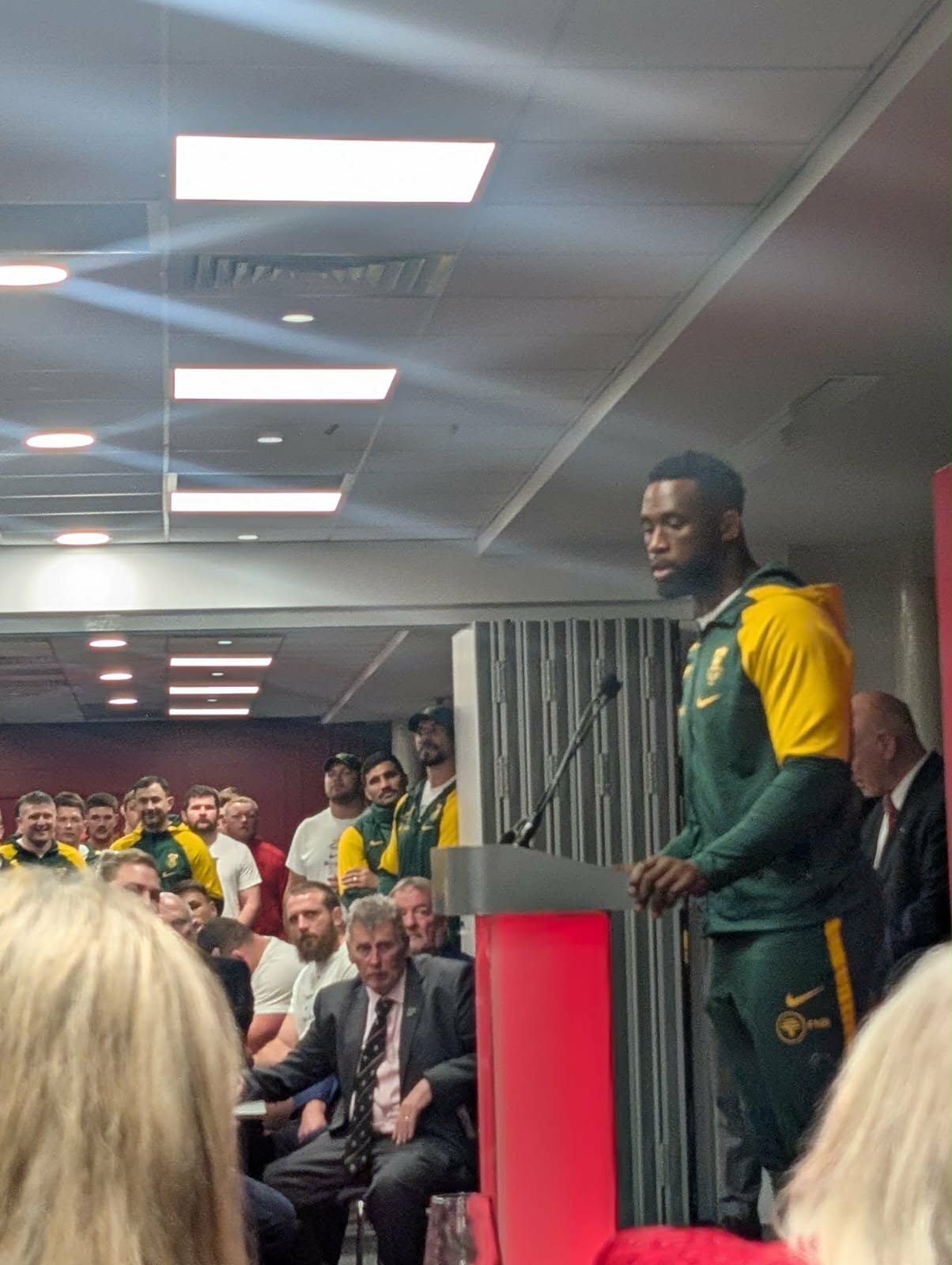
Siya Kolisi addressed the media in Cardiff. Courtesy of Brisbanerugby.
According to the World Rugby rankings, the round of 16 would mean that the Top two finishers in the six Pools, plus the next four teams placed after the round-robin stage. The eight winners would progress to the knockout stage.
The opening match will be held in Perth, likely between the hosts, Australia and New Zealand, to a record sold-out crowd. This will mean that these two teams won’t meet again until the final in Sydney. The All Blacks will have to negotiate a tough semi-final against the Springboks, while the Wallabies will have to overcome a mighty English side.
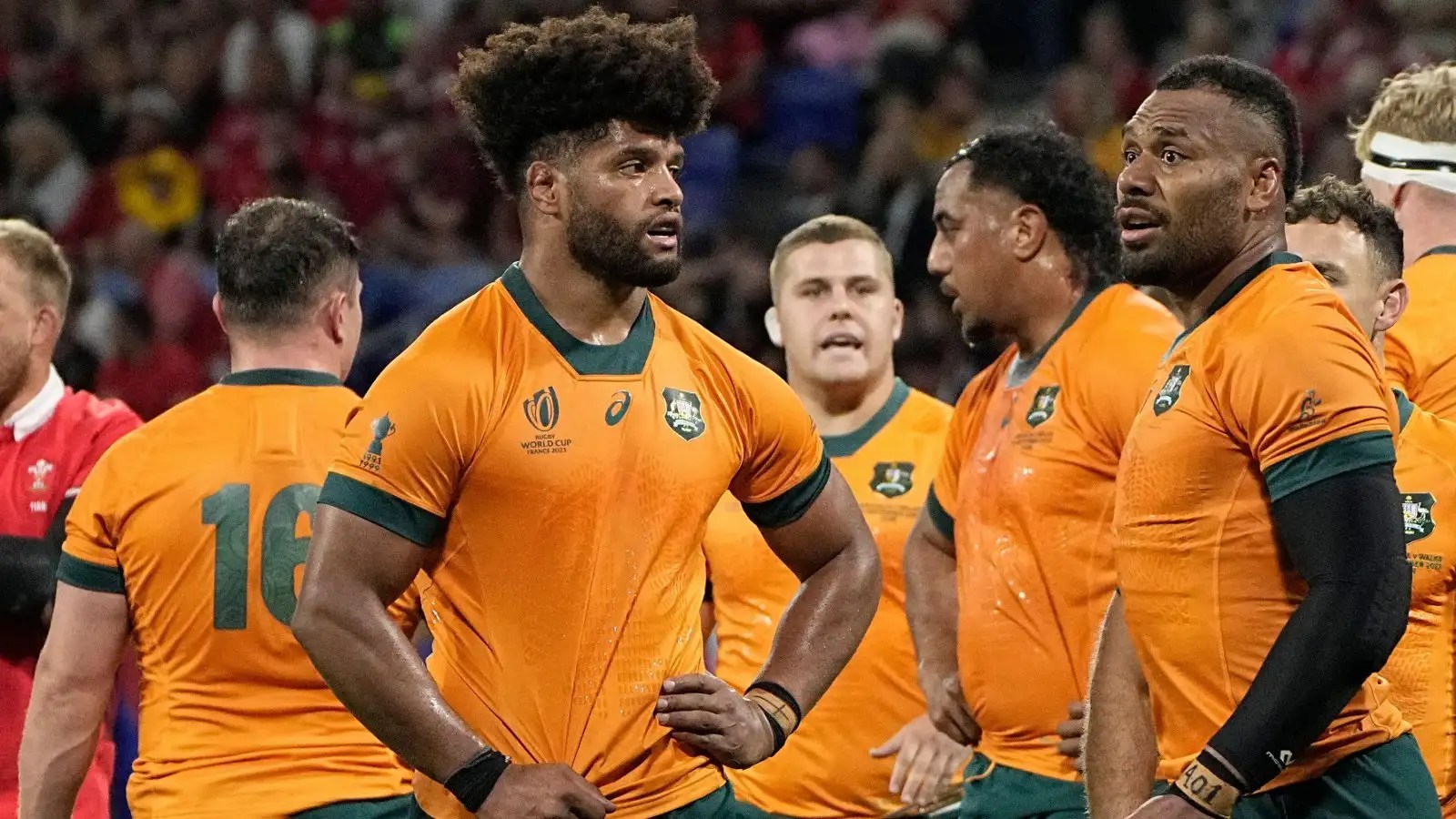
Wallabies in France at RWC 2023.
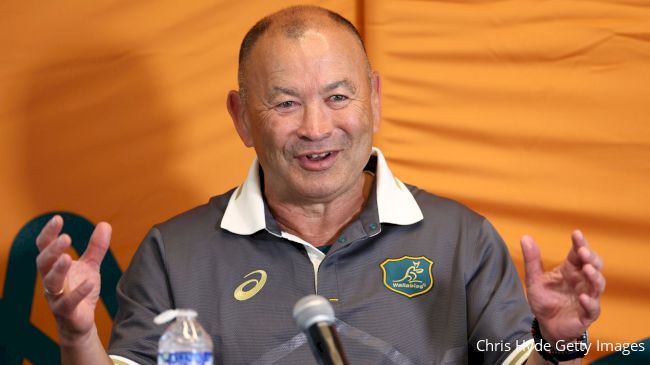
The Wallabies will have to play Japan in the quarter-final, a team they only managed to beat 19-15 at Tokyo’s Kokuritsugyogijo Stadium on October 25th this year. Eddie Jones’ men will be up for the challenge, possibly trying to replicate their RWC 2015 win over the Springboks in the Miracle in Brighton, arguably the greatest upset in not only Rugby World Cup history, but sport in general.
CJ in Tokyo at the Olympic Stadium. Courtesy of @brisbanerugby on Instagram
RWC 2027 is set up for the greatest contest in Rugby World Cup history, and the permutations will be studiously studied by the coaching staff of each participating nation, none more so than the mercurial Eddie Jones. Bring it on!!
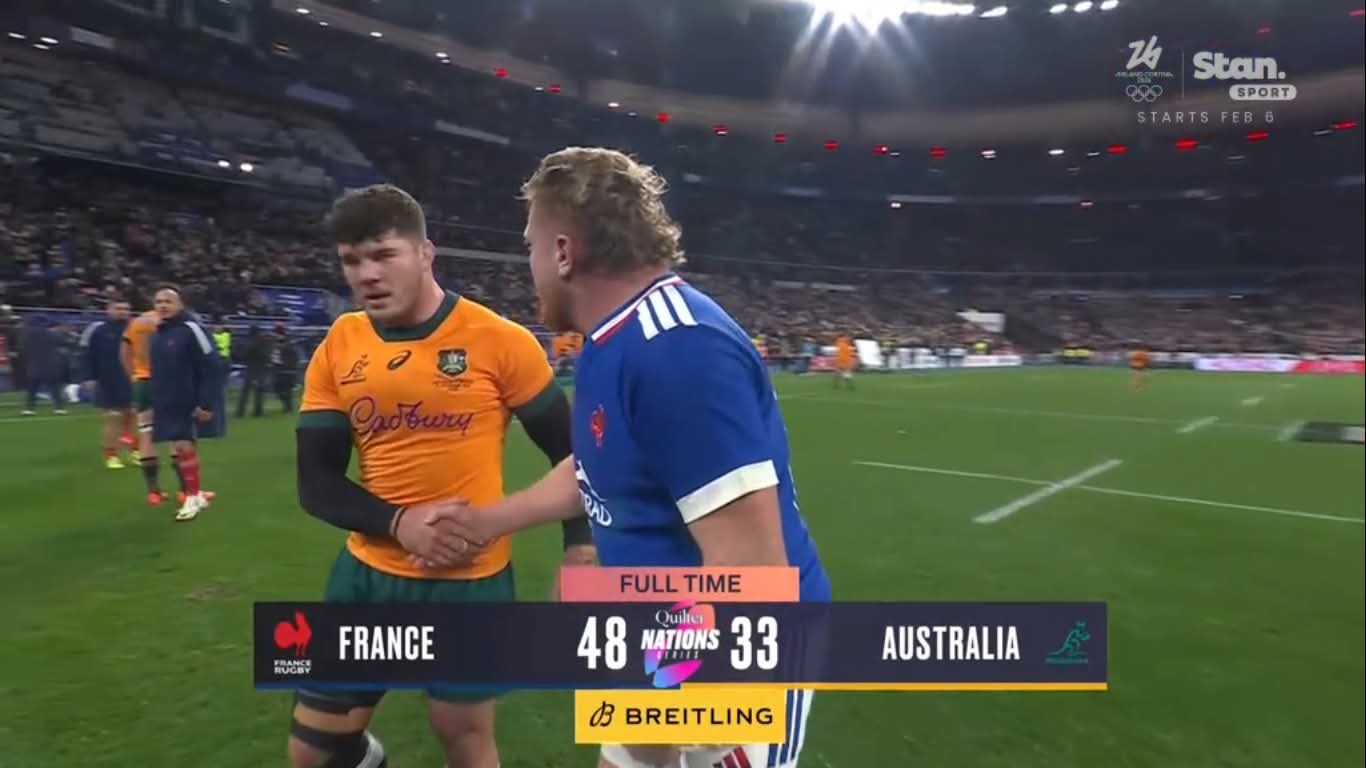
The Wallabies’ European vacation came to an end with a 48-33 loss to Les Bleus at Stad de France, just outside Paris in Saint-Denis. It capped off a season in which they won only five of their 15 tests, with memorable wins over the British and Irish Lions in Sydney and the mighty Springboks in Johannesburg.
With a 19-all half-time score, including a double by Queensland Red Matt Faessler, the Wallabies were right in it. In fact, they were only trailing by one point, 26-27, at the hour mark before conceding three converted tries to go down by 15. A much-improved outing by Joe Schmidt’s men before Tom Hooper received a Yellow Card in the 65th minute, and the penalty count was mounting, 10 in the second half. John Eales Medalist Len Ikitau was the standout, with 15 carries. Angus Bell was immense, scoring a breakaway try in his 50th test, and Josh Nasser went over on debut. Also, congratulations to Queensland Reds’ halfback, Kalani Thomas, on making his Wallabies debut.
Their European campaign started off at Twickenham with a bruising 25-7 loss to England, followed by a loss to Italy, 26-19; ironically, all 5 tries were scored by Australians. Unfortunately, Luis Lynaugh and Monty Ioana were wearing the blue of Italy. They moved to Dublin, where it all unravelled, despite the in-and-out-again James O’Connor trying his best to go down to 3rd ranked Ireland 46-19. Against France, they showed attacking flair with Matt Faessler bagging a double and his front row partner, Angus Bell, crossing the paint in the first half to have it all locked up 19-all at the break. World Rugby player of the year nominee, Louis Bielle-Biarrey, broke the Aussies’ spirit with a brilliant individual try in the first half and helped, Man of the Match, Nicolas Depoortere to a double. Fabien Galthie’s men were too strong in the end to smash the Wallabies
It is the first time since 1958 that the Wallabies have gone winless on the European tour. However, technically, they did beat a spirited Eddie Jones-orchestrated Japanese outfit, 19-15, in Tokyo on the first leg of the Spring Tour.
Earlier this year, when I saw that the Wallabies had a fixture against Eddie Jones’ Japanese side in Tokyo on the 25th of October, a plan was activated. It had been six years since my last visit for the RWC2019, and that was such a brilliant tournament, a testimony to the hospitality or “ometenashi” of the Japanese people. I booked a flight, organised accommodation and made an itinerary to maximise my time rediscovering a land where I lived for five years in my 20s.
Tokyo Olympic Stadium, or “kokuritsukyogijo”, was where the RWC2019 final was supposed to be played; however, due to oversight, the stadium wasn’t ready in time, and Yokohama Stadium was used instead. The stadium did host the delayed 2020 Olympics in 2021 (a great Trivial Pursuits question). A healthy crowd of 46,000 people sat comfortably in the cavernous 80,000-seat stadium while the match was played out on a rainy day in Tokyo. Joe Smidt’s experimental Wallaby side struggled to penetrate the well-drilled Brave Blossom’s side back under the tutelage of local hero, Eddie Jones. Wave after wave of forward runners were thwarted by the tenacious Japanese, and it was only a skilful interchange of passing that saw Josh Flook slip through for a try. The Aussies managed three tries in an underwhelming performance to start their spring tour to the Northern Hemisphere, only scraping home 19-15. The crowd favourite, Michael Leech, was immense, and his name was called out every time he touched the ball.
To say Japan is not a rugby-playing nation is a gross underestimation of her success. Following the ‘Miracle in Brighton’ at the 2015 Rugby World Cup, where the tenacious Brave Blossoms, under Eddie Jones, orchestrated one of the biggest upsets in not just rugby history, but all sports, where they took down the might Springboks in the dying seconds to win 34-32, saw a resurgence. Hosting the 2019 reiteration, they managed to beat Scotland and Ireland to claim top spot in their Pool and make the quarter finals for the first time.
Rugby union in Japan is a major part of the Japanese sporting landscape. While it may not catch the eyeballs of baseball or even the J-League soccer, it still has a rich history. A lot of Wallabies, Springboks and All Blacks ply their trade in Japan and get paid a healthy salary for their effort. We’ve seen the likes of Michael Hooper, one of the highest-paid Wallabies of late, have a sabbatical over there at the back end of his career. Noah Lolesio is over there now preparing for the League One, which starts shortly.
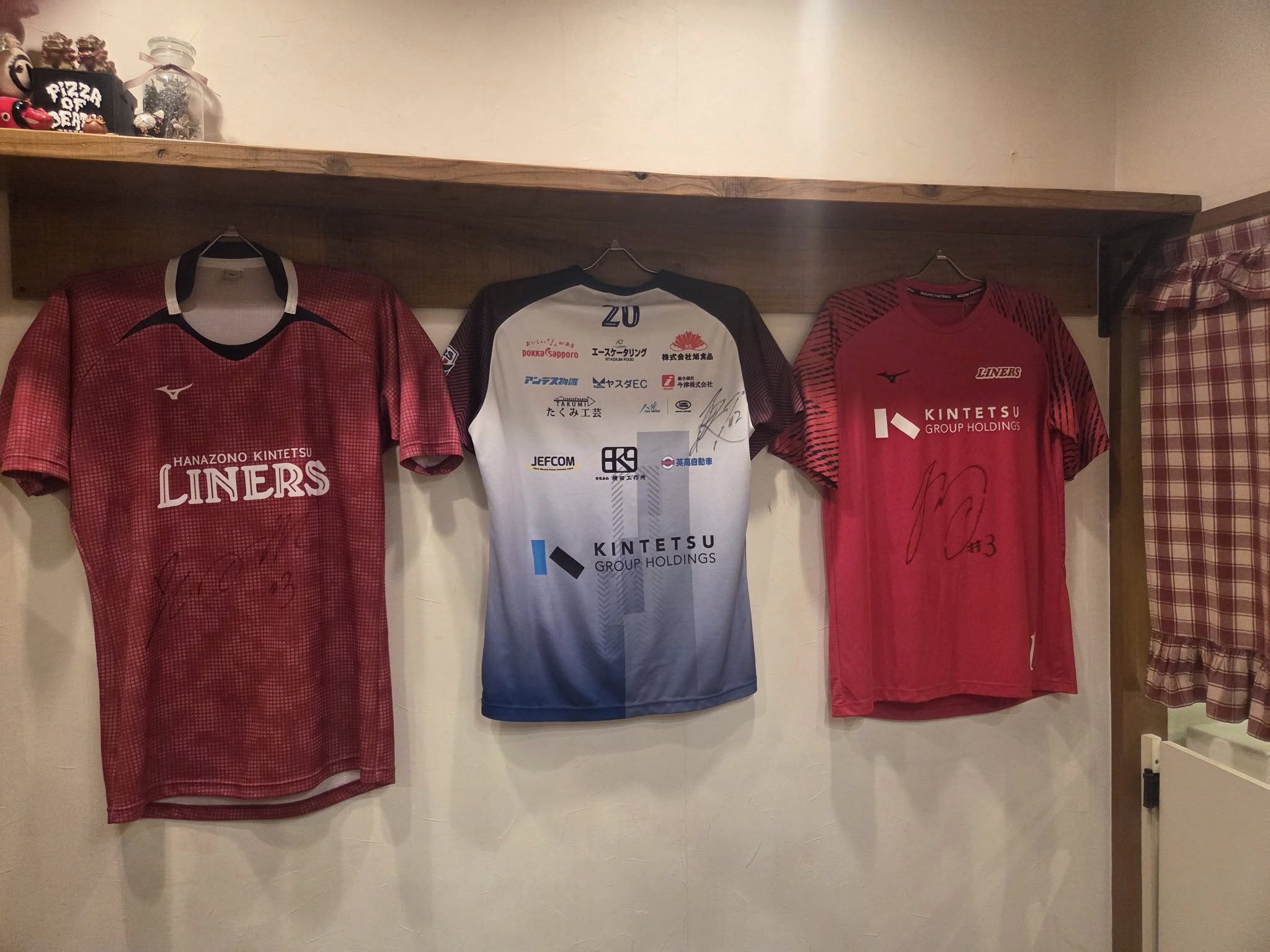
The Kansai region in western Japan is a fertile ground for rugby. The mighty Kobe Steelers have been a dominant force in Japanese rugby over the years. Wallaby legend Ian Williams played for them in the 1990s to great success, and of late, Dan Carter has led them to premierships. But it was in eastern Osaka where I found a rugby heartland at Hanazono, the Kintetsu Liners, coached by Will Genia and Quade Cooper, who had also played for them for several seasons.
To sum up my 17 days in the Land of the Rising Sun would be to say it was awesome. I had forgotten the generosity and hospitality of the Japanese people. Six years is just way too long. With Japan being part of the new Nations Cup of rugby, it will be sooner rather than later that I get back there.
Licking their wounds from a first-up, 24-28, loss to Los Pumas in Dublin, the British and Irish Lions are finally on our shores. Touching down at Perth International Airport late Sunday, the entity founded in 1888 is once again in Australia after a 12-year absence.
First up, they tackle a Wallaby-laden Western Force at Optus Stadium on Saturday, as part of their 9-match tour. They play all the Australian Super Rugby Pacific provinces, plus an Aus/NZ combined match and an Indigenous/Pasifika match, culminating in three test matches against the Wallabies.
What separates Rugby Union from other codes is its deep historical tapestry, of which a British and Irish Lions tour is part of that fabric. Only gathering every four years, they alternate their tours between New Zealand, South Africa and Australia. Dating back to 1888, a squad made up of players from England, Scotland and Wales toured Australia and New Zealand, playing provincial games without any international test matches.
The last time they toured was to South Africa in 2021 during COVID. They played in empty stadiums and lost the series 1-2. This time, their fans are coming in great numbers, having been deprived of a tour for 8 years, since the drawn series against New Zealand in 2017. Twelve years ago, the British and Irish Lions won the series against Australia 2-1, a first since 1989, though they did lose to the Brumbies 12-14 en route to the test matches.
So strap yourself in for six weeks of intense rugby that has not been seen on our shores for a long time. May the best teams win.
As the Wallabies are about to embark on their spring tour to the British Isles and Ireland, we should assess where they are at. Coming off four wins from their nine matches this season, and being ranked 10th in the world, they are not in anyway achieving success.
Two wins over a weak, developing Welsh side and a shaky win over Georgia to start Joe Schimdt’s tenure has barely been a pass mark. Then, despite some positive aspects, going down to the world-champion Springbok outfit in two tests at home proved that there is still plenty of work to do with this team. A narrow one-point victory over Argentina followed by a massive 67-27 loss the following week exposed this side’s deficiencies.
Rounding out The Rugby Championship with a loss at home to the All Blacks and a week later losing in Wellington did not do the Wallabies any favours. Leaving Schmidt with only four wins from nine outings and the lowest ranking of 10th in the world provides plenty of homework for him ahead of the spring tour.
It hasn’t been all doom and gloom, though, with a wealth of talent exposed with 16 debutants given a chance. Carlo Tizzano was a standout coming in for the injured Fraser McReight and Dylan Pietsch showed he is up to world standard, particularly in his first run-on test in Wellington. Rob Valetini was a menace alongside Harry Wilson and McReight; and Taniela Tupou showed how tough he is but is barely getting through 40 minutes.
However, if the Wallabies are going to have any impact at next year’s British and Irish Lions tour, they are going to have to show plenty of improvement. The spring tour provides that opportunity. Bringing in overseas-based players such as Will Skelton does just that. Also, Quade Cooper or Bernard Foley to provide some guidance for Noah Lolesio, Ben Donaldson and Tom Lynagh. Even from left field picking one of Brisbanerugby’s top sons, Isaac Lucas, who is killing it in Japan, could be another solution for the lacklustre display at number 10.
CJ & Isaac Lucas courtesy of @brisbanerugby on Instagram
Well technically not, as it’s only the third biggest global sporting event. A mere 20 nations qualifying after an exhaustive elimination process, however, the tournament is three times longer at six-weeks and 12 venues from Hokkaido to Kyushu. The influx of foreign invaders will be the greatest since Commodore Perry’s arrival in 1853 at Shimoda.
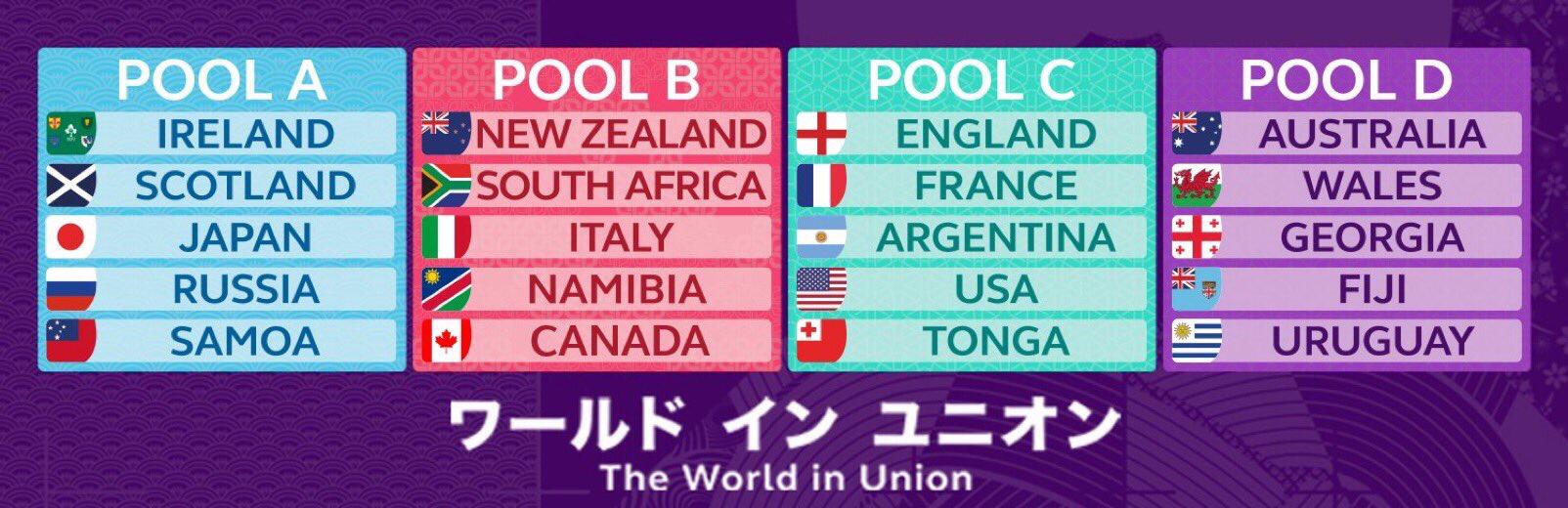
The four Pools of five competing for a place in the knockout series.
Perennial favourites the All Blacks from New Zealand will be looking for an unprecedented three-peat, having won the last two incarnations in 2011 & 2015. Although, Ireland will go into the tournament as World No. 1, due to the quirky World Rugby algorithm that determines placings. Never before have the ‘Men in Green’ made a RWC Final, although their Quarter-Final match against RWC1991 winners, the Wallabies, at Landsdown Road will go down as ‘the one that got away‘.
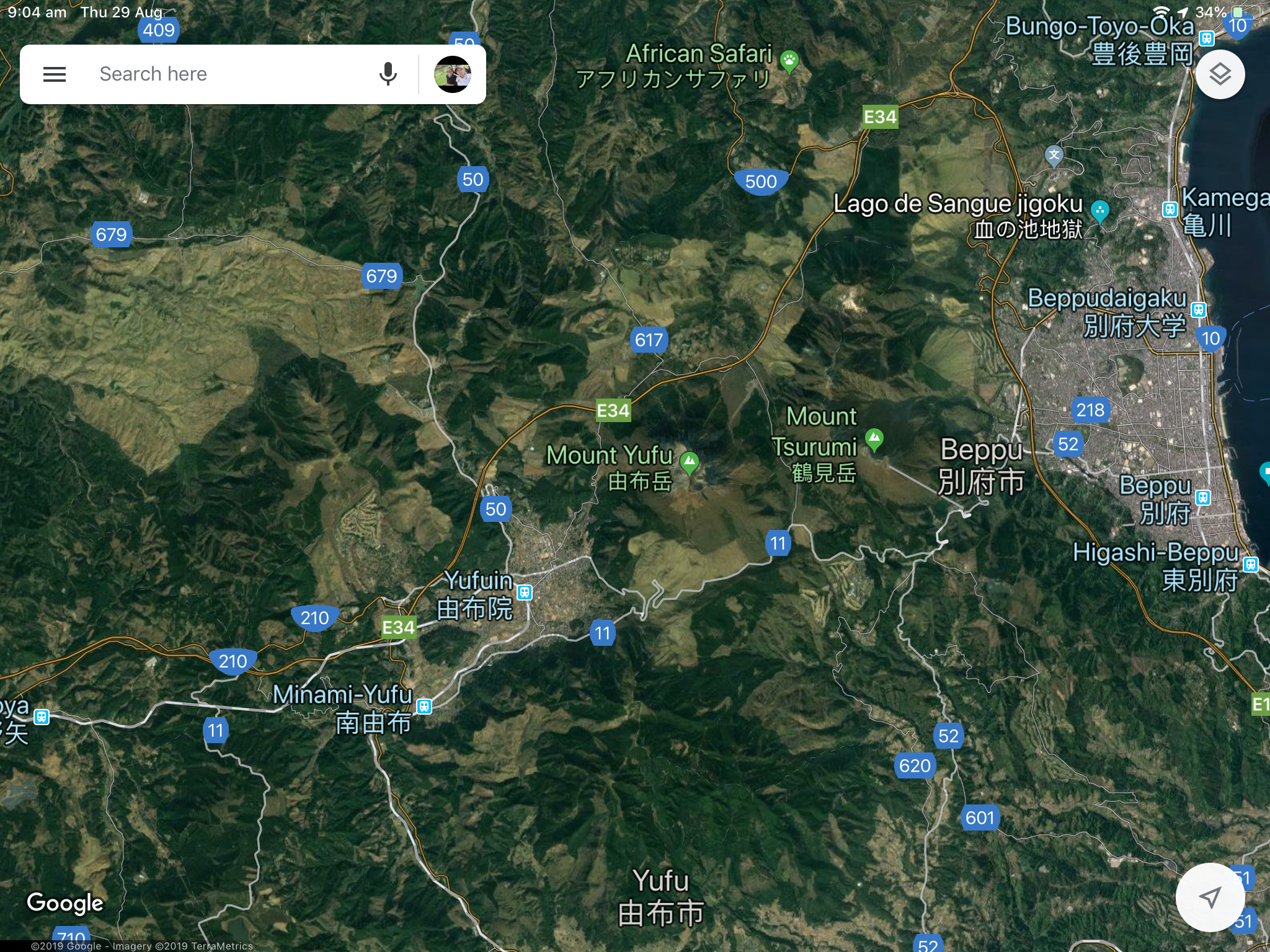
The teams descending on Japan, somewhat delayed due to Typhoon Faxai, should be embraced by the Japanese populous along with the tsunami of international supporters. Rugby people are a different breed: beer-swilling aficionados as opposed to football (soccer in the English speaking world outside of England) hooligans. They will appreciate the culture, the ceremonies, the nature and the history that abounds there; as well as the onsen or hot springs, the most renowned are found in Beppu, Kyushu; with matches played in Oita, including two very important quarter-finals, these are a must-see (map below).
Visiting Japan 12 months out from the Rugby World Cup I got a sense that the ‘general’ Japanese population were somewhat unaware of the tournament. When questioned they would reply with, “Tokyo 2020?” Just last week at a theme park on the Gold Coast some university students visiting from Japan on their summer break in Australia looked puzzled when I said I was going to Japan for the Rugby World Cup (admittedly, they were from Ibaraki Prefecture, an hour or so north of Tokyo on the Joban Line, where no matches are being played). Also in Australia, when people ask why I am going to Japan the response often is, “Do they play rugby in Japan?”
Undoubtedly, when RWC2019begins this Friday at Ajinomoto Stadium the vast majority will get on board. Not everyone is a diehard rugby fan, but when a spectacle such as the Rugby World Cup is on your doorstep you can be assured that the populous will respond and Japanese ‘omotenashi‘ (hospitality) will come to the fore. At the 2015 tournament, 25 million in Japan tuned in to watch Japan v Samoa on their television sets, so the interest is there. The other takeout from that tournament held in the UK was the 34-32 last-minute win over the Springboksby the Japanese Brave Blossoms; recreated in cinema with the just-released “Miracle in Brighton“.
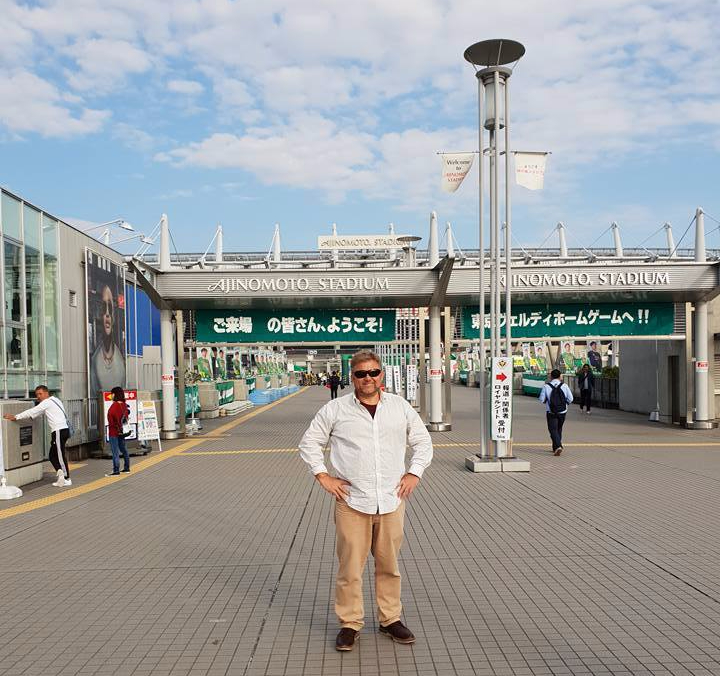
CJ last year at Ajinomoto Stadium, Tokyo.
Rugby Union has a long history in Japan dating from 1866 in Yokohama and, while being more popular in the universities, the company based Top League has started to attract larger crowds. Unfortunately, Japan’s Super Rugbyteam the Sunwolves will be axed from the competition after the 2020 season, though I’m sure their company based Top League will eventually open up to international teams from Hong Kong and Perth (convincing the JRFU will be a challenge, though).
All and all this bodes well for a spectacular tournament that I am very much looking forward to attending. 楽しみですネ‼
Having returned from just over a month in North Queensland, I am buoyed by the fact that the boutique sport of rugby union in Australia is growing healthily in the regional areas of Queensland. Despite not being able to watch my beloved Queensland Reds play Super Rugby on one of Townsville’s The Ville Casino’s numerous television screens, I did encounter plenty of diehard rugby people in FNQ, none more so than my mate Severin “Bunny” Andreassen from Brothers Cairns, now the President of Brothers Juniors in Townsville. His son Jack is a rugby development officer for Townsville and District Rugby Union (TDRU)and shows a passion for the game like his father. I watched him play a spirited match for Brothers’ 1st Grade side against a strong Teachers-West at Mike Carney Toyota Park (above, where I had played myself for a Brisbane Colts v North Queenslandside, back in the day).
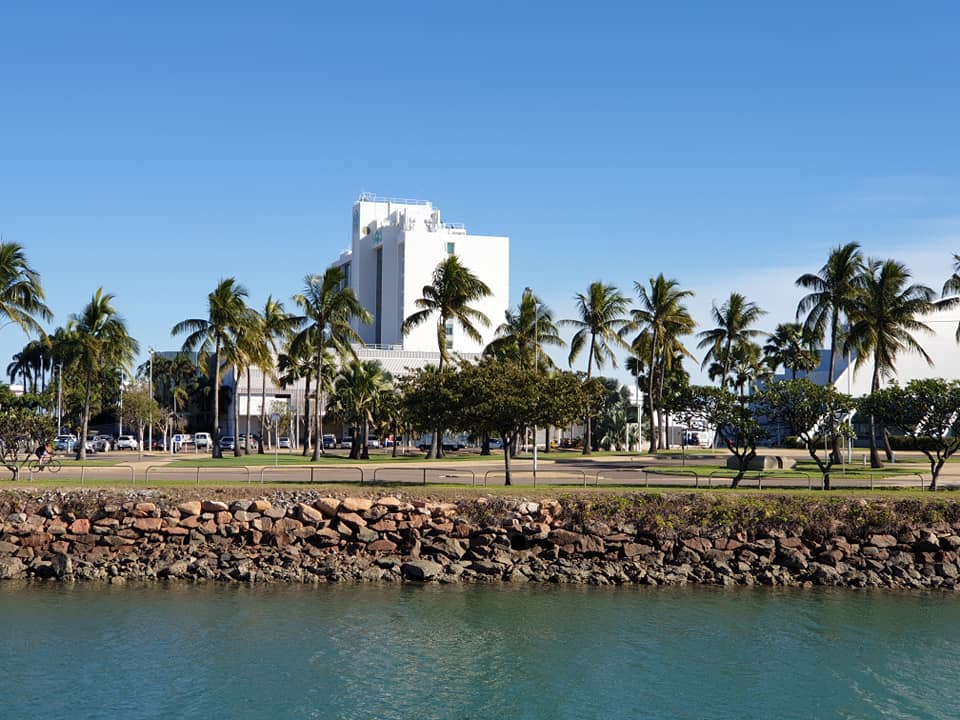
The Ville Casino, Townsville
Club rugby in Townsville has this year seen the merger of Western Districts with James Cook University (JCU)which WestsPresident, Athol Giddens, told me was a much needed shot in the arm for both clubs -especially since JCU had recently started a rugby league team. The 2019 amalgamation has provided a junior club for JCU to develop players from and proper training facilities, with lighting –far superior to Wests‘ previous locations, I was told. I watched them going through their paces at the university under the guidance of Kiwi ex-pat, Campbell Yates, whom Giddens would like to have several of. “The main issue is finding quality coaches and getting them accredited with Level 1 and 2 coaching certificates from the QRU,” Giddens said.
The tyranny of distance is always an issue in the bush. However, they are rugged people up north and travelling over an hour one way for a Saturday fixture is not unheard of. Charters Towers is over an hour and a half away and they are in the Townsville competition, along with Burdekin and Ingham. Brothers Townsville are traditionally the stronghold, though lately Teachers-West has built up their ranks and have two quality backs in Curtis Rayment and Josh Fletcher. Both these local boys orchestrated Teachers’ 54-0 win over a young Brothers side, in a match where plenty of passion was on display.
During my time in Townsville, I also met Brolgas stalwart coach, John Rauch, for many lunchtime conversations at the school we were both teaching at. Originally from New South Wales, he has taken a passionate interest in the rugby scene in North Queensland over the past 30 odd years, playing for Brothers Townsville before being involved in coaching. Every two years, around Easter, Rauchtakes a representative side from Townsville, under the Brolgas banner, to Japan to play select schools over there. Later this year, he will take a team from The Cathedral School to Europe for rugby union matches -another bi-annual trip he organises at his school.
The Cathedral School is a 100-year-old co-ed boarding school in Townsville.
Last week, the Queensland Junior State Championships were held at Downlands College in Toowoomba. It was great to see representative teams from all over the State, including the Brolgas from Townsville. One of my students who I had seen play in Townsville made the U13 Brolgas side which I was pretty chuffed about. Next month we see Townsville host the annual Queensland School Sport (QSS) 11-12 years rugby union championship, which bodes well for the future of our code. In a rugby league stronghold, ‘the game they play in heaven’ is in good hands.
The NRL Cowboys are a big deal in North Queensland
Some of the team jerseys that will be at the RWC2019. Photo courtesy of CJ on Instagram @brisbanerugby.
From the inception of the Rugby World Cup in 1987, where Australia and New Zealand hosted the inaugural event, the manifestation of this great tournament has been at the forefront of international attention. None more so than the 1995 tourney in South Africa with the Springboks competing for the first time for Nelson Mandela’s newly minted, Rainbow Nation. Who would forget the galvanising of a population under the same banner through rugby union? It was the inspiration for the book, “Playing the Enemy“, by English journalist, John Carlin, that inspired the 2009 movie, “Invictus” directed by Clint Eastward.
Nelson Mandela presenting the Webb Ellis Trophy to Francoise Pienaar RWC 1995. Photo courtesy of news.com.au
Four years later at RWC 1999, former Wallaby captain and Australian rugby commentator, Andrew Slack, stated ahead of the New Zealand v France semi-final in Twickenham, that he would move to the Tongan capital of Nuku’alofa if France won. When the French came from 24-10 down at halftime to upstage the Kiwis 43-31 by the fulltime whistle, Slack was packing his bags. The final that year saw the Wallabies, under John Eales leadership, win their second Webb Ellis Trophy, 35-12 over France.
Despondent All Blacks side after RWC1999 semi-final loss to France. Photo courtesy of planetrugby.com
By 2007, the tournament moved to an exclusively non-English speaking nation France. However, the memorable French 20-18 win over the All Blacks in the quarter-final was in Cardiff, Wales. Incendently, the Argentine Los Pumas affirmed their rugby pedigree defeating the French hosts twice. This time it was the South Africans that clinched their second title, 15-6, over England at Stade de France, Saint-Denis in Paris.
Los Puma’s halfback, Augustin Pichot, celebrates after their 17-12 victory over hosts France in the opening match of RWC 2007. Photo courtesy of The Irish Times.
It was the 2011 edition that finally saw the mighty All Blacks overcome 24 years of ridicule and derision to secure their second Webb-Ellis title. In front of 61,079 home fans at the sacred Eden Park, the crucible of rugby in New Zealand, the ABs overcame their nemesis, France, to hold on by the slightest of margins, winning 8-7. Despite the valiant efforts of the French captain, Thierry Dusautoir’s, Man-of-the-Match performance, Les Bleus, couldn’t overcome the Maori challenge.
New Zealand All Blacks do the Haka ahead of the RWC 2011 Final with France. Photo courtesy of the Irish Times.
The Rugby World Cup unites diverse ethnic cultures and languages. It brings the so-called second tier nations to compete against the best teams on the planet in front of huge crowds with a global audience. In RWC 2015 the average attendance across all 48 matches was 95.27%, the most well-patronised event with a total of 2,477,805 in attendance (Wikipedia 2018). The match between Japan and Samoa achieved a television audience record of 25 million in Japan and ITV in the UK recorded 11.6 million viewers for the England v Wales match (RWC site). However, the biggest revelation to come from RWC 2015 was the “Miracle in Brighton“, when the Eddie Jones coached Japan Brave Blossoms defeated the South African Springboks 34-32 after the fulltime siren. This has inspired Australian writer and director, Max Mannix to produce a movie of the lead up to this extraordinary occurrence, with filming commencing on Australia’s Gold Coast this month.
The jubilation on the Japanese team’s faces after defeating South Africa in RWC 2015 in Brighton. Photo courtesy of telgraph.co.uk
This year the Rugby World Cup carnival, for the first time, moves to Asia and the Land of the Rising Sun. Japan will host the third biggest sporting event on the global stage, with big shoes to fill after the successful UK edition four years hence. Action starts in 8 months with the opening ceremony on September 20th at Ajinomoto Stadium, in Tokyo’s western suburbs, followed by hosts, Japan, taking on Russia through to six weeks of competition culminating with the final at the cavernous 72,327-seat Nissan Stadium in Yokohama.
4年に一度じゃない。 一生に一度だ。
“Not once every four years. Once in a lifetime!”
Such a bold statement, though justifiably so with the tournament making an initial foray into the Orient, laying testament to the multitude of cultures that make up the rugby family. The Hong Kong Sevens continually draws on this diversity to host the most successful annual 7s rugby pilgrimage there, but for the Rugby World Cup to be held in Asia, this will surely be a once in a lifetime experience.
From the northern ocean roads of 北海道(Hokkaido)to the nine states of 九州(Kyushu)in the south, across 12 stadiums with dedicated host cities, rugby fans will be treated to not only 48 high-quality international rugby matches, but a sensory overload in this ancient country of temples, shrines and castles coupled with exquisite culinary delights presented to the highest caliber. Bring it on!!
The Wallabies at Odawara Castle near their training facilities. Photo courtesy of CJ on Instagram @brisbanerugby
In late October I made my way over to the Land of the Rising Sun on a sabbatical to try to really comprehend how rugby is growing in Japan and the fanfare and excitement created around #RWC2019.
My first impressions in Tokyo were that plans were well underway to host the third major global sporting tournament and a buzz was growing amongst the Japanese people. However, I was somewhat delusional inside the bubble of the rugby going public in that first week bookended by the Bledisloe 3 match in Shin-Yokohama on October 27th and the Japanese playing the All Blacks in western Tokyo the week after on November 3. The bubble I refer to was being invited to functions by rugby aficionados in Tokyo from former players of All France, members of the Japanese Rugby Magazine and rugby people at Yokohama Country & Athletic Club.
CJ with Rugby Magazine, Japan production crew
With my PA, Alisa Okawa, I attended the Third Bledisloe Match between the Australian Wallabies and the New Zealand All Blacks on Saturday, after arriving the day before, at the cavernous Nissan Stadium in Shin Yokohama. Location of the Football World Cup final in 2002 hosted by Japan and South Korea the 72,327-seat stadium attained a record attendance for an international rugby match in Japan with over 46,000 fans watching the Kiwis defeat the Aussies 37-20. An entertaining match with a strong All Blacks side making a clean sweep of the series against a novice Wallabies outfit that will befit greatly from the exposure a year out from the World Cup. In what could be heralded as a preview to the RWC2019 final, as was the case for the RWC2015 final, these two behemoths of the World Cup era in rugby holding three and two Webb Ellis trophies respectively may not end up the finalists after the annus horribilis the Wallabies have endured in 2018 winning only 3 of 12 tests.
CJ with the Webb Ellis Trophy in Yokohama
The week that followed was catching up with old rugby mates in Tokyo and discussing proposals with stakeholders that set to benefit from Japan hosting the World Cup. I even managed to pull on the boots to play a rugby match at YC&AC in Yokohama over 20 years since I had last played on that ground in the 1990s. To my surprise, there was a schoolboy/girl tournament going on there sponsored by Aussie Beef. Former Brave Blossoms representative and current Toshiba Brave Limpus stalwart, Hiroshi Ono or Kin-chan as the locals call him, was in attendance to give clout to the event that hosted teams from New Zealand and Australia. Great to see rugby being promoted in this soccer/baseball-mad country. I really hope the Japanese Rugby Football Union (JRFU) can really capitalise on the exposure rugby is getting through the RWC2019. Talking with Kyodo news rugby correspondent, Rich Freeman, after my match, he seemed somewhat pessimistic with the Japanese Top League being abandoned for the 2019-20 season. He also thought they should have lowered the ticket price for the Bledisloe Cup match to try for a sellout crowd after the rugby public had just forked out for World Cup tickets. It will be interesting to see how any benefit can come from hosting this event.
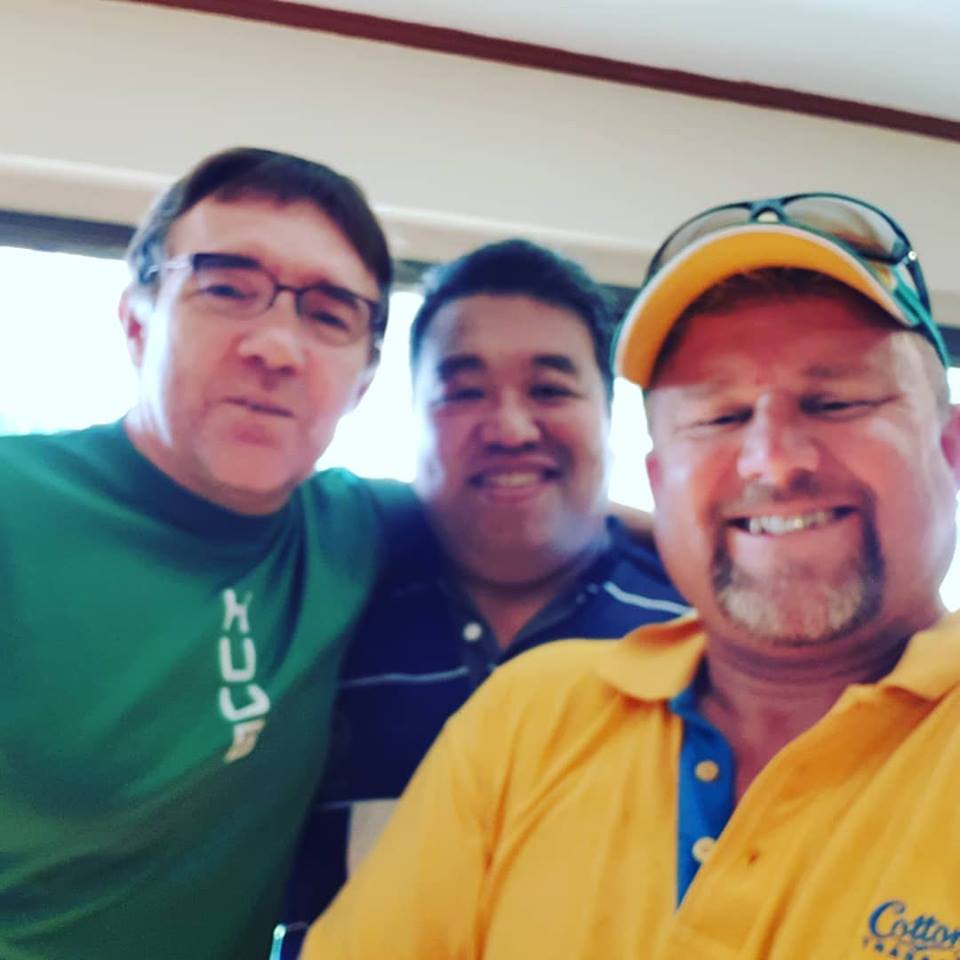
Kyodo news rugby correspondent, Rich Freeman with the big man, Naiki, and CJ
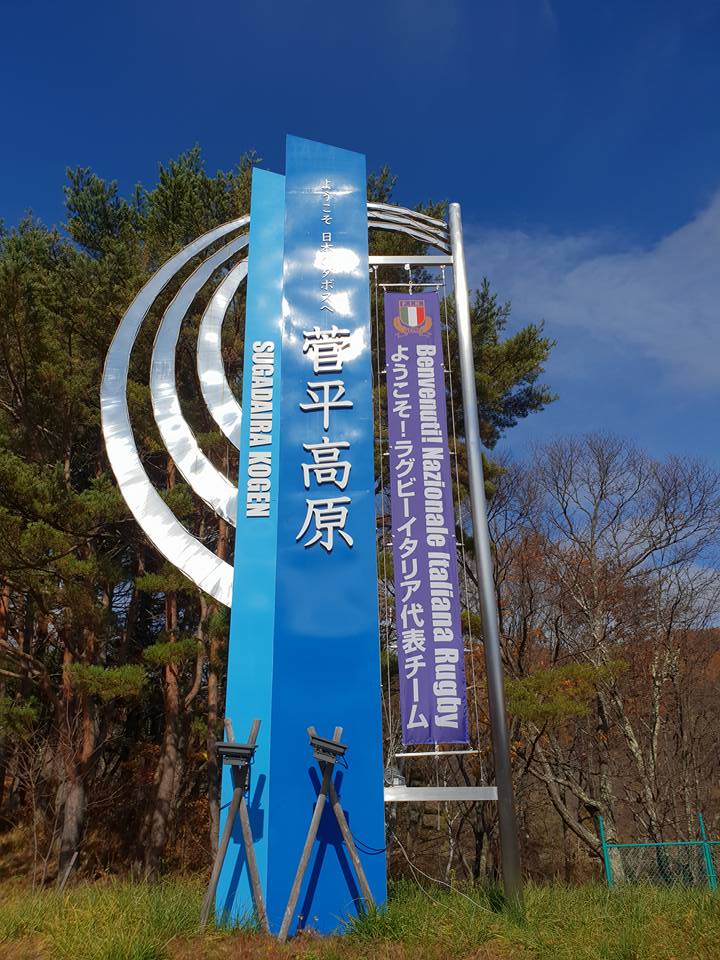
For my second week I made my way up into the mountains of central Japan to Nagano where a good friend of mine, Hide, lives in the City of Ueda. He showed me the rugby town of Sugadaira on the outskirts of Ueda where the high school rugby teams from all over Japan gather in summer to go through their paces. Driving through the town you can’t help but be overawed by everything rugby from the rugby ball monument in the centre of town to the Canterbury store, amongst other rugby brands, scattered throughout. Even the 7/11 store caters for sports supplements not common at other franchise locations in Japan. These highlands are where the Italian rugby union team will be based during the six-week tournament starting in September next year.
The Italian rugby union side will be taking up residence in Sugadaira Highlands
Ueda welcomes the Italian rugby side for RWC2019
Sugadaira Highlands welcome the Italian rugby union side for RWC2019
Heading back to Tokyo for my final weekend I felt somewhat disheartened by the fact that what I initially thought was an excitement for the RWC2019 was, in fact, more a curiosity as to what it would entail. Overshadowed by the Tokyo2020 Olympics, rugby still as a long way to go to capture the minds and souls of this unique homogeneous society reluctant to cash in on the tourism bonanza this event will bring. A chance to really open up and embrace the outside world could be missed unless something drastic is done. I will offer my services to ensure the success of this event and rugby sevens at the Olympics because there is a true bond of camaraderie born from rugby players and their fans.
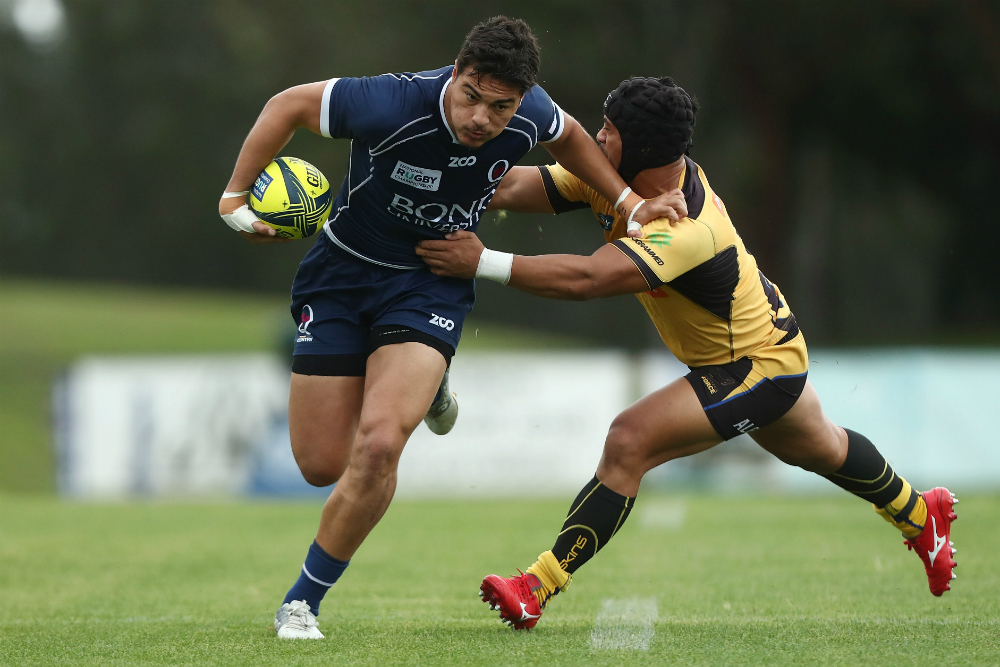
On Sunday, fans braved the second half rain at Bond University to watch the National Rugby Championship semi-final between last year’s premiers Queensland Country and the Western Force. The star-studded Country outfit did not fail to impress from the getgo with tries aplenty in the first 20 minutes. None more so than 2018 Reds bolter, 18-year-old Jordan Petaia. Some very impressive running from the young Wallabies squad member playing at outside-centre with two tries in 15 minutes under the watchful eye of Reds coach Brad Thorn, who was standing beside me. From our vantage point, Caleb Timu also ran in for a five-pointer, on the blindside, with the Western Force down to 13 men.
Young gun, 18-year-old, Jordan Petaia running strongly in the NRC semi-final. Photo courtesy of Getty
Hamish Stewart did not bring his kicking boots which proved costly in the first half as Qld Country went to the sheds up only 20-14, after Western Force kicker, Ian Prior, converted their first two tries. Stewart did make-up for his earlier failures with the boot in the second half with two conversions and two penalty goals, but leaving points out there was scrutinised by Reds coach Thorn.
CJ with Brad Thorn enjoying the early tries by Queensland Country at Bond University. Photo CJ on Instagram @brisbanerugbycom
In the 53rd minute, referee Damon Murphy called the match off due to the lightning in the area, but after about 15 minutes the play was back on. A few spectators left at this juncture, however, there were plenty that stayed, eager to watch more from the impressive Queensland Country outfit. The final score was 45-24 to the home side, booking them a place in next weeks final in Suva against Fiji Drua.
Queensland Country coach, Rod Seib, said, “I’m really pleased with the team’s performance today. The team delivered.”
Some real standout performances by Caleb Timu and Angus Scott-Young that should see them get a future call-up to the Wallabies.






















 Brisbane Rugby.com