Rugby at Hanazono

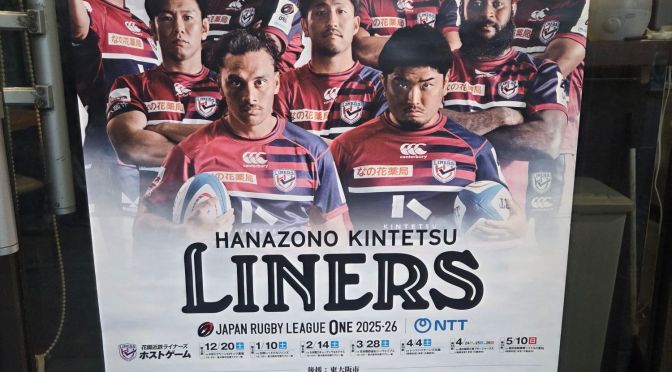
About a 20-minute train trip east of the transit station of Namba in Osaka, we find the rugby town of Hanazono. The Hanazono Rugby Stadium 🏟️ was established in 1929, the first stadium in Japan specifically designed for rugby. I got off the Kintetsu-Nara Line at Higashi Hanazono. I made my way to the stadium, about a 15-minute walk away, past shops and restaurants supporting the local team known as the Kintetsu Liners (est. 1929); even the manhole covers displayed rugby images from when Japan hosted the Rugby World Cup in 2019, and this boutique stadium, which holds about 27,000 spectators, was one of the venues for some of the international matches. In fact, there will be another international match there this year, when the Japanese Brave Blossoms host the Wallabies on August 8th.
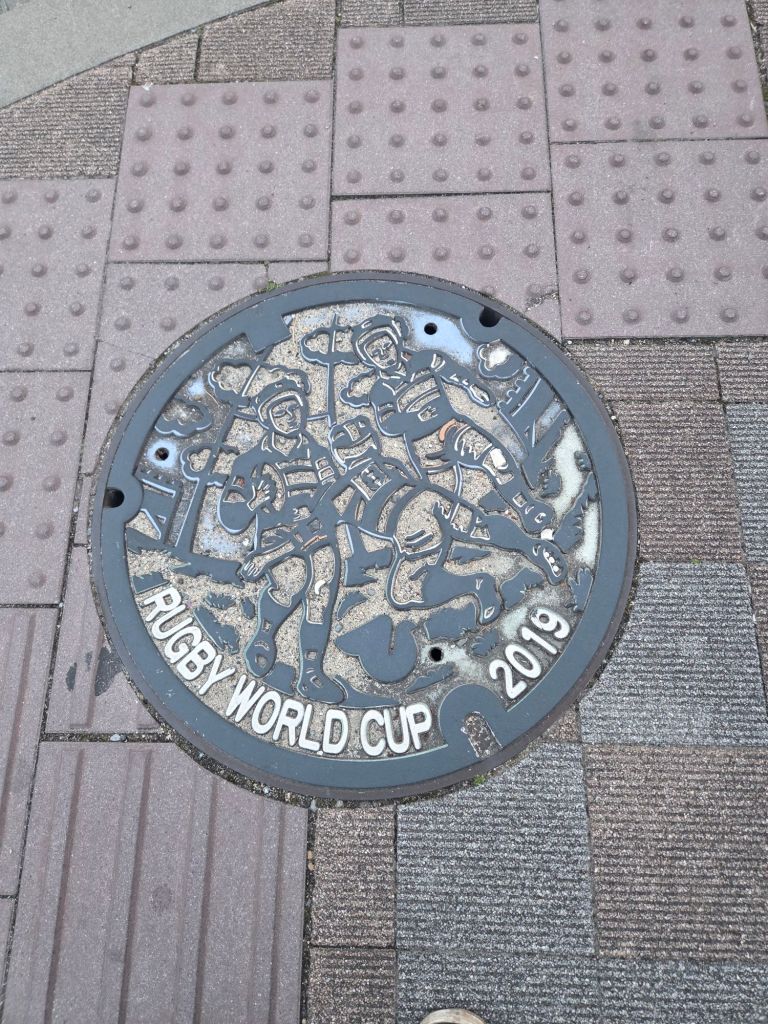
Manhole cover photo taken by CJ.

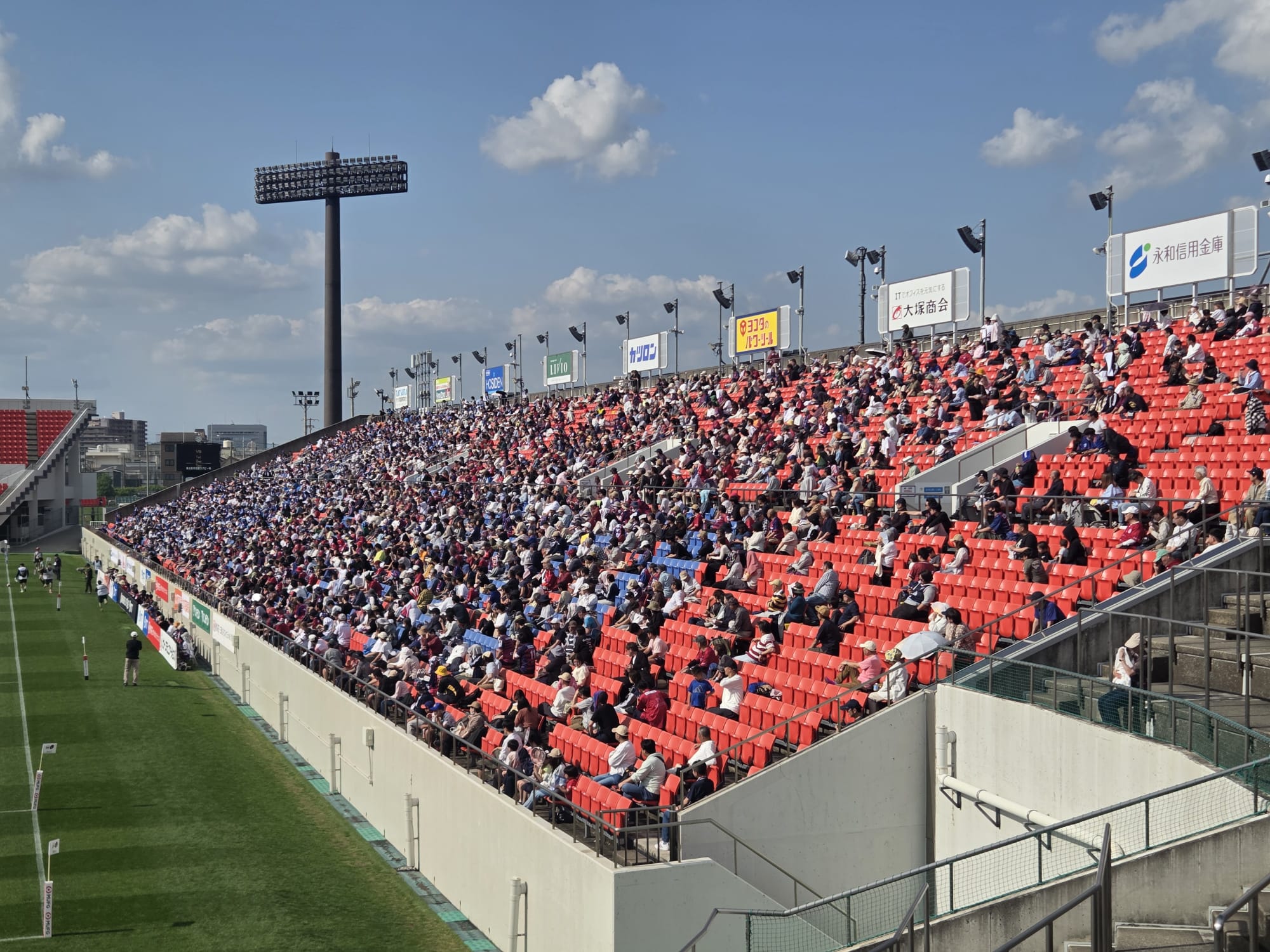
A pleasant 24 degrees Celsius on Saturday and largely blue skies, after a few rainy days during the week, saw the locals turn out in force for this Japanese Div. 2 match between 1 and 3 on the table. What was supposed to be a walk in the park for the local Kintetsu Liners certainly looked that way when they ran in the first try. With Springbok legend, five-eight Manie Libbok, at the helm, the Liners looked every bit why they were the Top of Div. 2 and regained their status in Japan League One. However, the Shimizu Koto Blue Sharks were not going to give up without a fight. Their half of the East Stand in blue (see photo below) became vocal as they started scoring points. Rugby in Japan is serious business.
At halftime, the beer queue under the stadium was long but efficient, and I had some yaki-soba washed down with a Nikka Black Highball. The smoking area was set up like a rugby field.
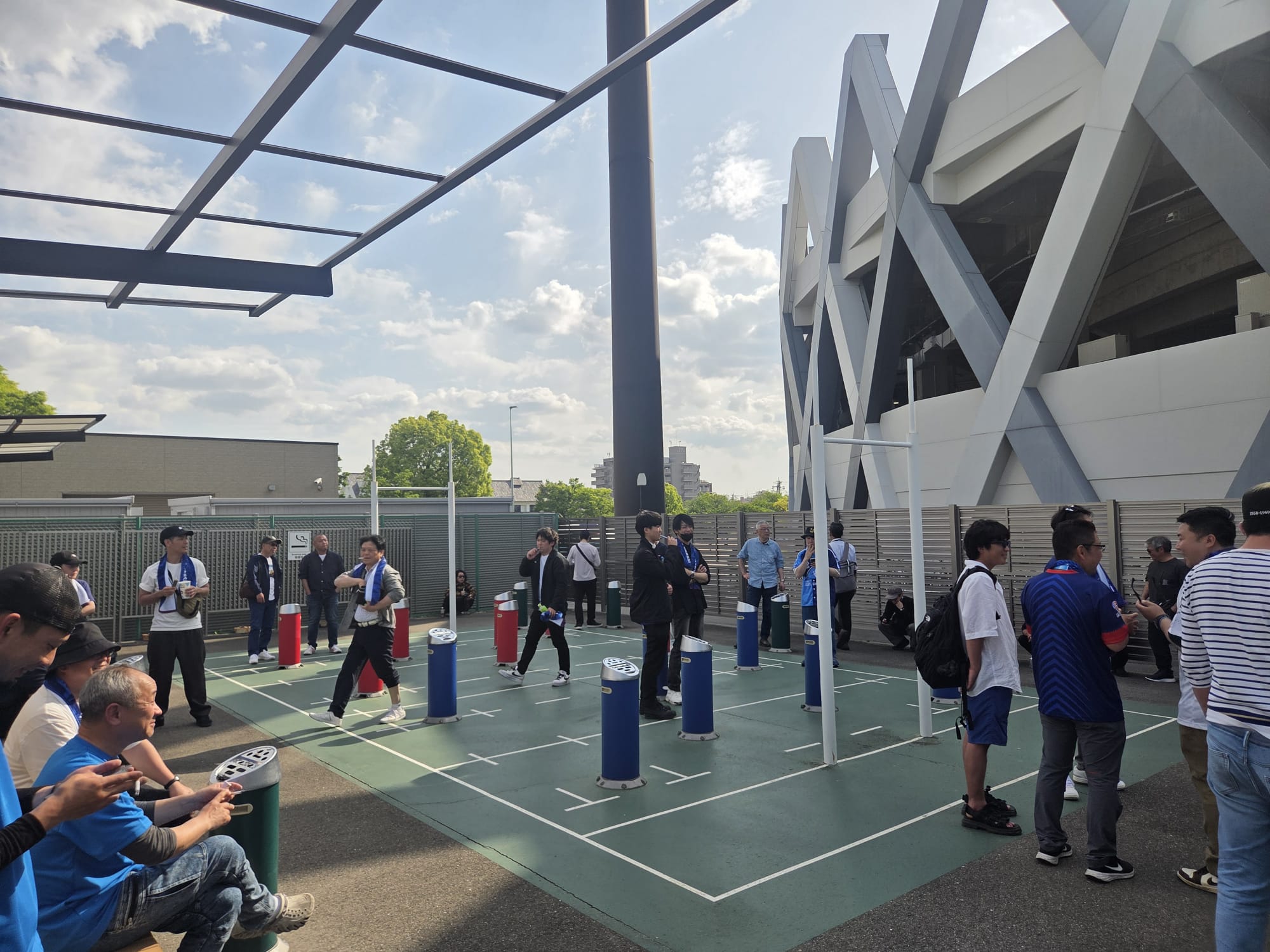
CJ's photo of Hanazono smoking area at Halftime.

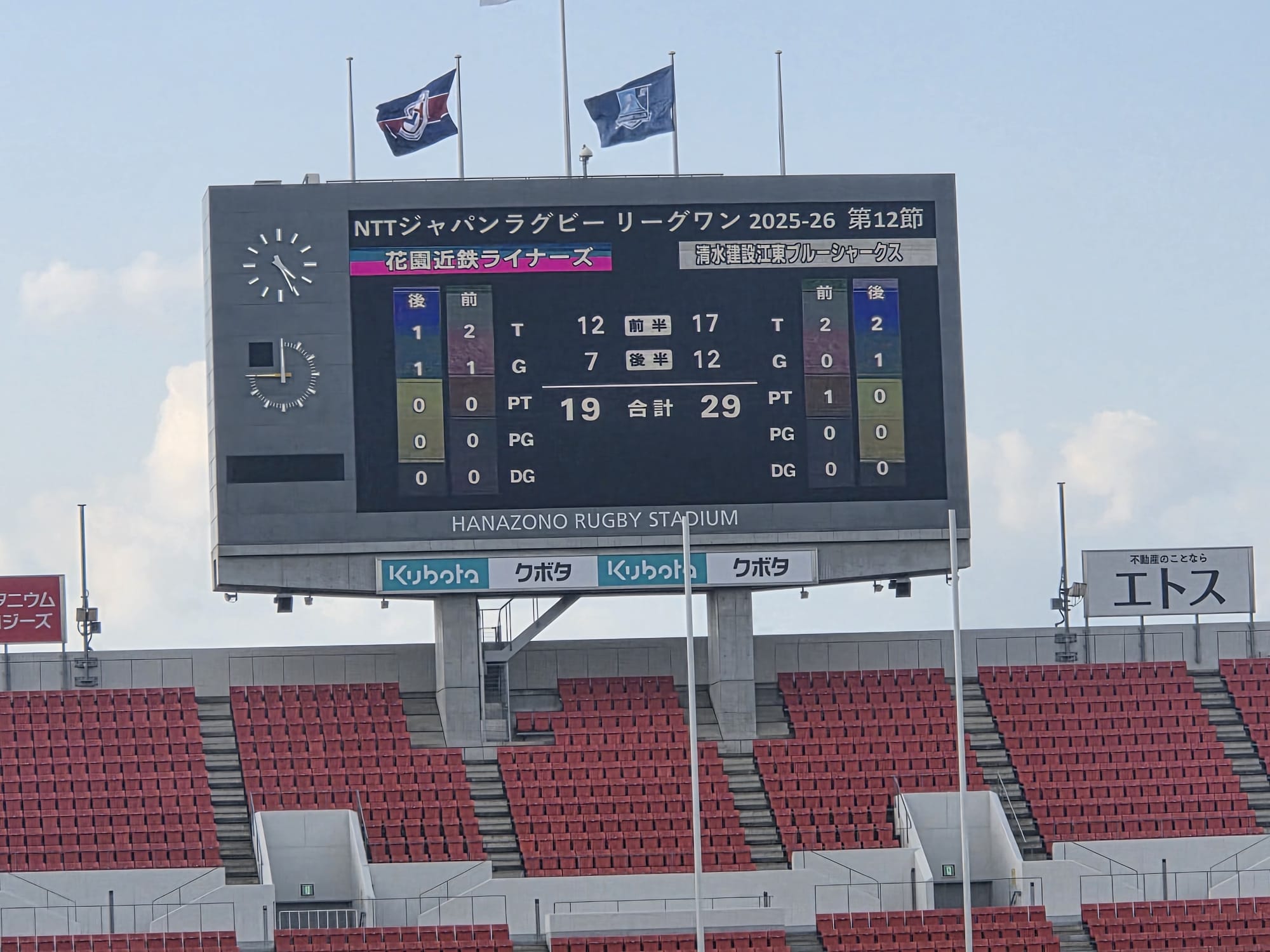
In the second half, the men from Koto-ku in Tokyo kept their foot on the pedal, snuffing out any chance the local team had of winning. Kintetsu are one of the oldest rugby clubs in Japan, founded in 1929. They have won three All-Japan National titles: 1966, 1967 & 1974 and eight Company Championships: 1953, 1956, 1957, 1961, 1966, 1969, & 1074 (Wikipedia). It’s been a while since they’ve won any titles, so they need to get back into the Japan League One. An Australian coach, John Mulvihill, from Souths Rugby Club in Brisbane, was the last person to get them back into that top league, and he coached them for several years. Currently, two former players and Brisbanerugby favourite sons, Will Genia and Quade Cooper, are the present head-coaches. Genia told me he was quietly confident his team would pull through the play-offs at the end of May to regain their position in League One. However, the Shimizu Koto Blue Sharks were not going to make their job any easier by running away with the 29-19 victory this afternoon.
Winners Are Grinners

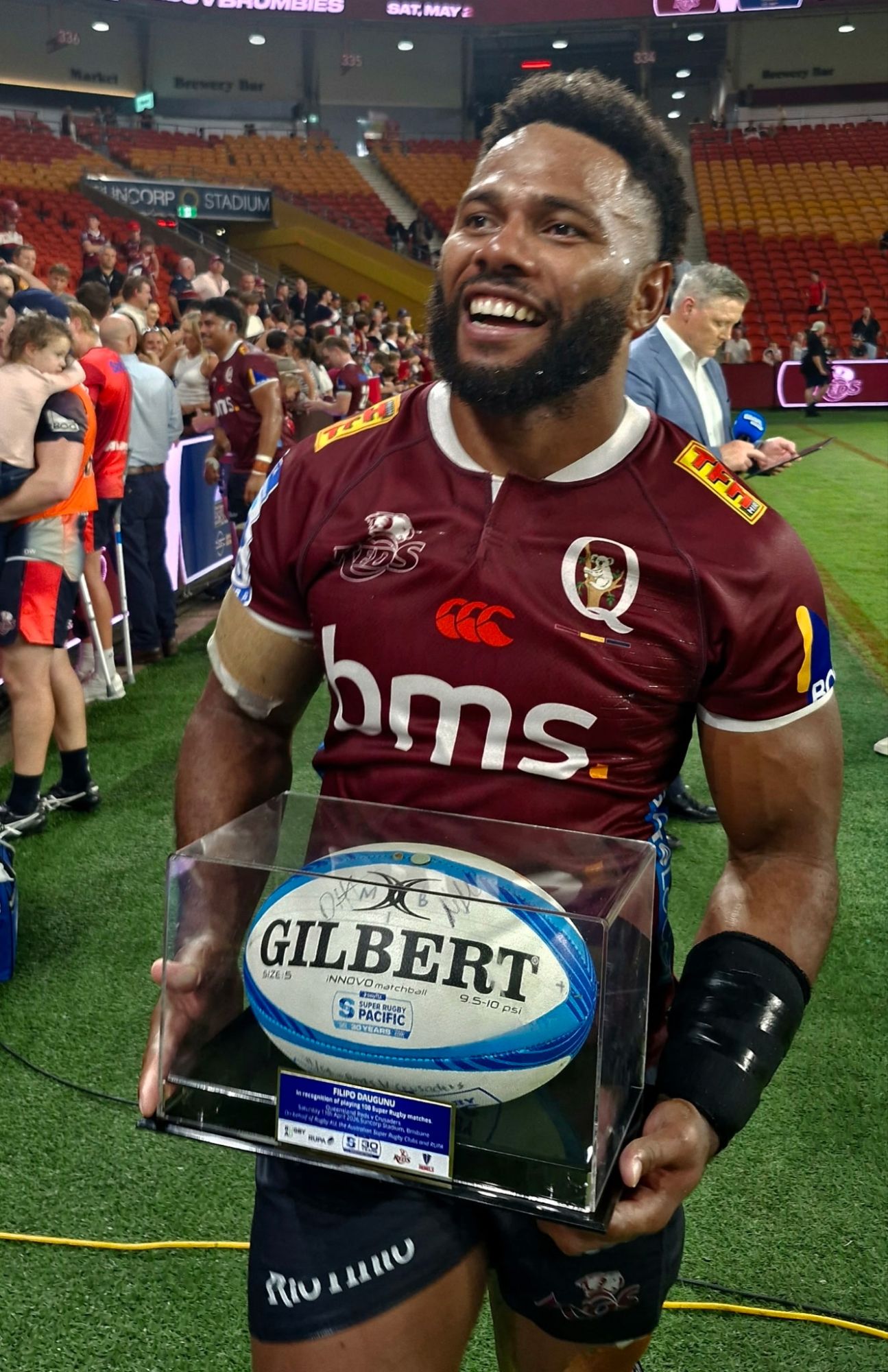
After being blown out of the park in their last two outings, Les Kiss’ men finally showed the Suncorp faithful that they are genuine Super Rugby Pacific contenders. Having the Hurricanes put 50+ points on them at the Cake-tin, and then the Western Force a further 40+ at home, the Reds’ dressing room was a lot happier place to be last night after defeating last year’s premiers, the Crusaders 31-26, for the first time since 2012. In Filipo Daugunu’s 100 Super Rugby cap, he showed that he is a world-class winger, scoring a try of his own. Kiss said in the post-match conference that his versatility from 12 to 15 makes him a valuable asset.

Filipo Daugunu on his 100th Super Rugby cap. Photo Courtesy of David Kapernick @brisbanerugby
Will Genia match winning try 15 years ago in the Super 12 final in 2011. Photo courtesy of Reds Rugby

https://www.facebook.com/share/r/18RCoxjQcY

Back to the Drawing Board

12,248 faithful watched our beloved Reds get schooled by the men from the west at Suncorp last Saturday night. This can only be described as a total capitulation. The armwrestle from the beginning appeared that both sides were here to rumble; however, Fraser McReight’s men couldn’t produce the goods and bring home the Easter chocolates. Queensland teams of the past, such as the 2011 Super Rugby Champions, who are celebrating their 15-year anniversary at Suncorp Saturday night, have always prided themselves on defence. Simon Cron’s selection proved a point: Les Kiss must rally his troops, as it doesn’t get any easier hosting the Canterbury Crusaders this Saturday at Lang Park. Kick-off is 7.35pm (remember daylight saving has finished).

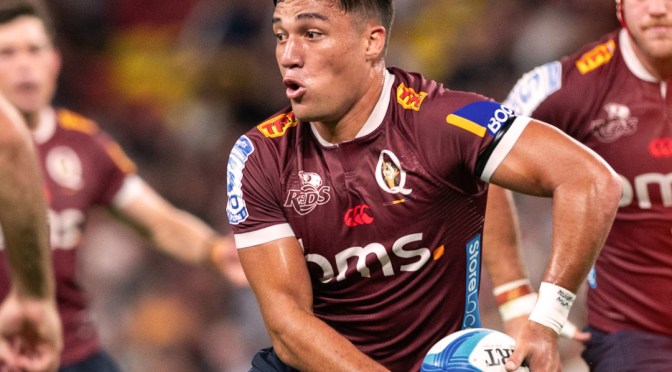
The Western Force were the first to cross the paint to lead 7-0 with Argentine rep, Viaolini Ekuasi, in the 11th minute. Soon after, the men in Red equalled the score with a well-executed move off a lineout by birthday boy Treyvon Pritchard, replacement, Tim Ryan, aka the Junkyard Dog. He went through untouched near the posts off a first-phase ball from a lineout. Carter Gordon tied the score at 7-all with the successful conversion. They added to their total due to the smarts of Kalani Thomas to put workhorse Joe Brial crossing the chalk in the 24th minute. The first half finished with ex-Red, Matt Grealy, receiving an offload from captain Nick Champion de Crespigny to score, with Ben Donaldson converting in the 39th minute to go to the break 21-12.

  • Photo courtesy of rugby.com.au

Ben Donaldson was the form five-eighth on the night, bettering his opposite, Carter Gordon. The return of Dylan Pietsch is great for the Wallabies, but he did some damage against the Reds ‘Wallaby-studded backline, running it up strongly. The Western Force just showed more passion to get their Super Rugby Pacific 2026 season back on track.

At half-time, down 12-21, it was anyone’s game, but the Western Force just showed more passion to get their Super Rugby Pacific 2026 season back on track. Led by Captain Nick Champion de Crespigny, the Force played a textbook match, schooling the Reds at their fortress, winning 42-19. Argentinian lock, Franco Molina, scored a double hat-trick.

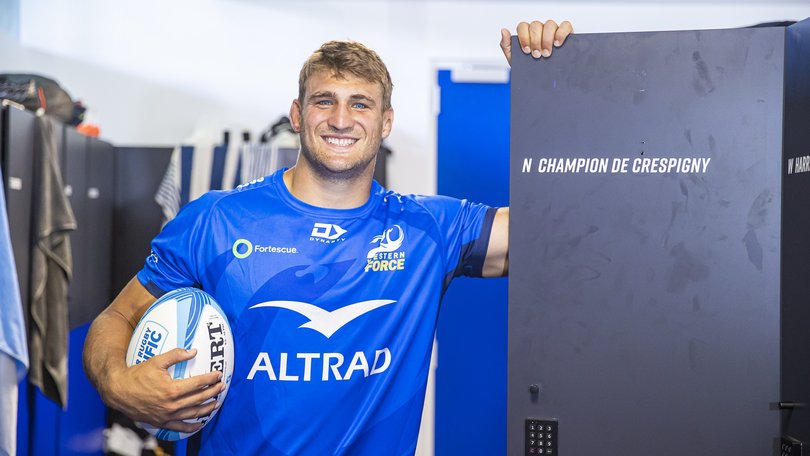
New signing Nic Champion de Crespigny. Photo courtesy of the West Australian.