
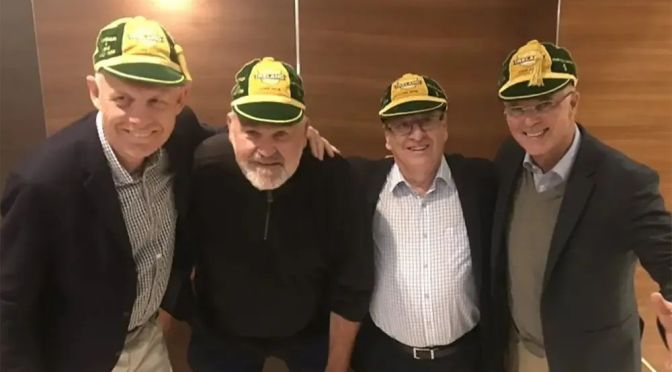
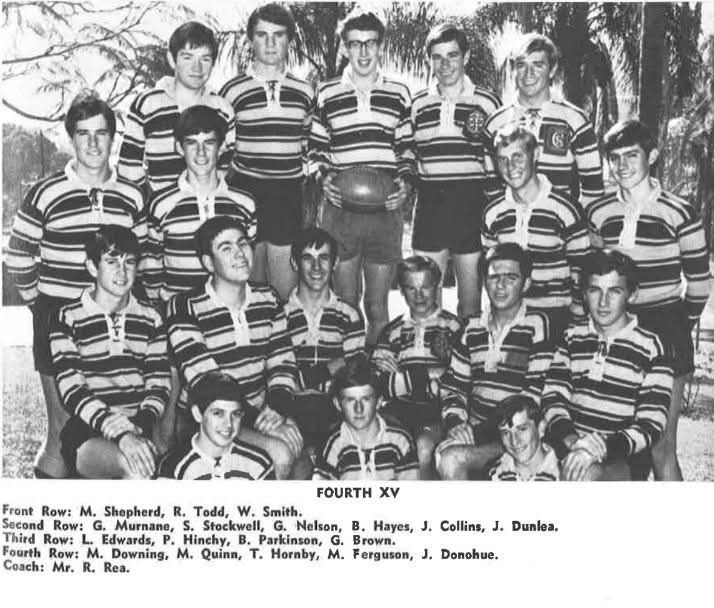
This old boy of St. Laurence’s College, South Brisbane (1970) was, by his own admission, not much of a rugby player, but week after week he turned out on the fields of Brisbane and in Year 12 was a fixture in the College 4thXV.
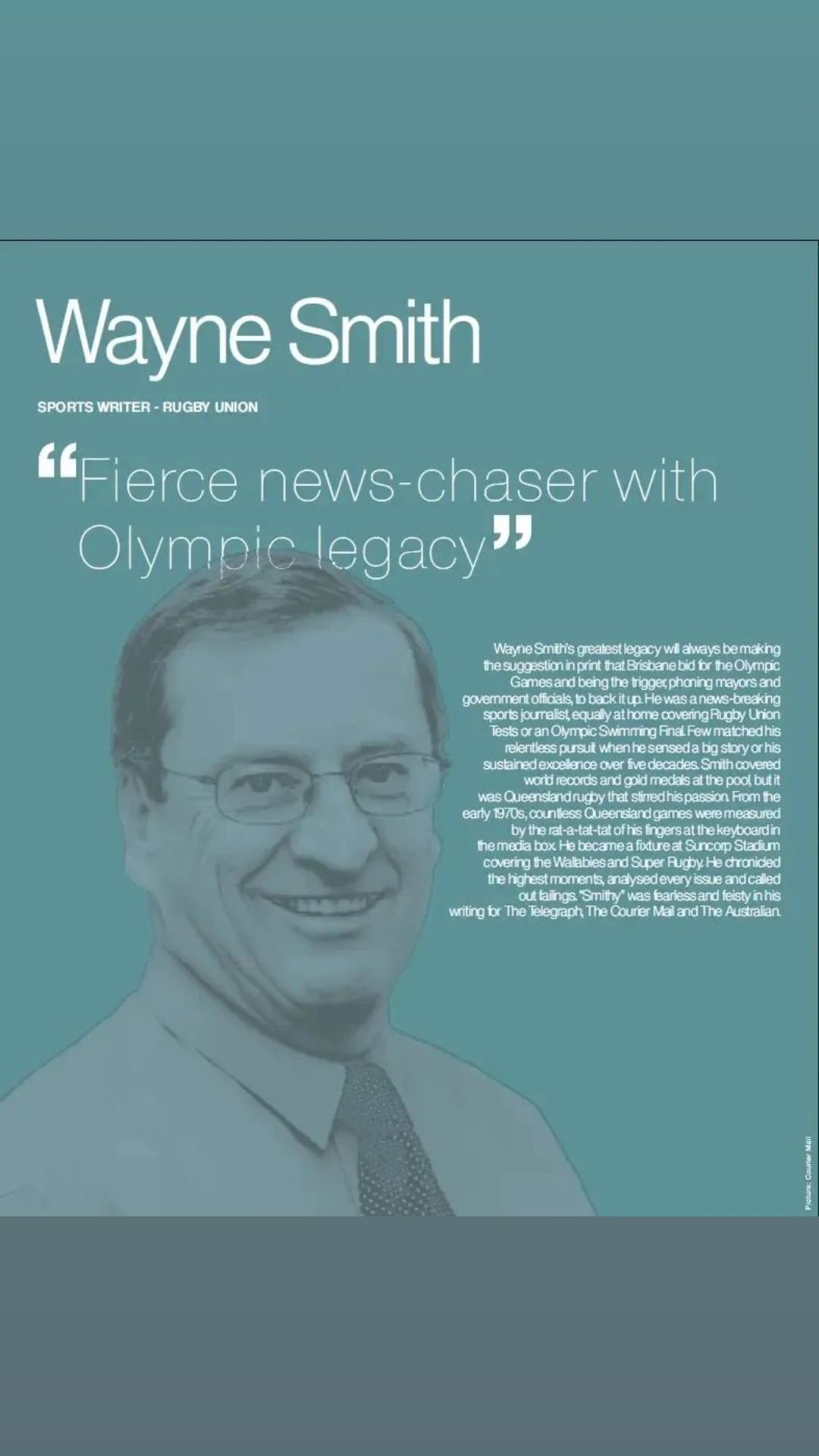
His lifelong love of Queensland and Australian sport, and Rugby Union, in particular, impacted sport in Australia more than many know. He was the first person to lobby the leaders of the City of Brisbane and the State of Queensland to bid for the 2032 Olympics. So, in July 2021, as expected, Brisbane was confirmed as the host city for the 2032 Olympic Games. You can rightfully raise a glass to this SLOB (St. Laurence’s Old Boy).
(Note: I have collected information from a number of sources for this instalment, and some of the work is the property of Rugby Australia and The Australian newspaper.)
Whatever happened to Wayne Smith, SLC 1970?
Starting on Australia Day 1971, a young 17-year-old commenced his cadetship at the Brisbane Telegraph at the furthest possible point from a Rugby Field. “My very first assignment in journalism was to go out and interview the family of a bloke who had tried to run a level crossing and not quite make it,” Smith recalled. “I remember walking into this house, and down the corridor, I could see a grieving widow, half a dozen kids screaming and a priest. I thought to myself, nah nah, I’m not going in there, and this was my introduction to journalism…day one.”
A few weeks later, transitioning to the sports desk, with his predecessor going off to write a book of poetry. “A search of the company files revealed that I had played Rugby. The fact that it was the 4th XV at St Laurence’s College was good enough, and I got the gig.” With a stellar Rugby career in the 4th XV, he was perfect for the job, and it came as no surprise that Smith’s first question to the sports editor was, “Where’s Ballymore?”
Smith notes that the leading Rugby writer at the time was Frank O’Callaghan, who later went on to be known as Frank O’Rugby. Incidentally, one of Frank’s grandsons, Tom, is playing in the 2021 SLC 1stXV. Upon venturing into the press box at Ballymore for the first time, “watching Brothers score some very complicated try involving most of the players.”
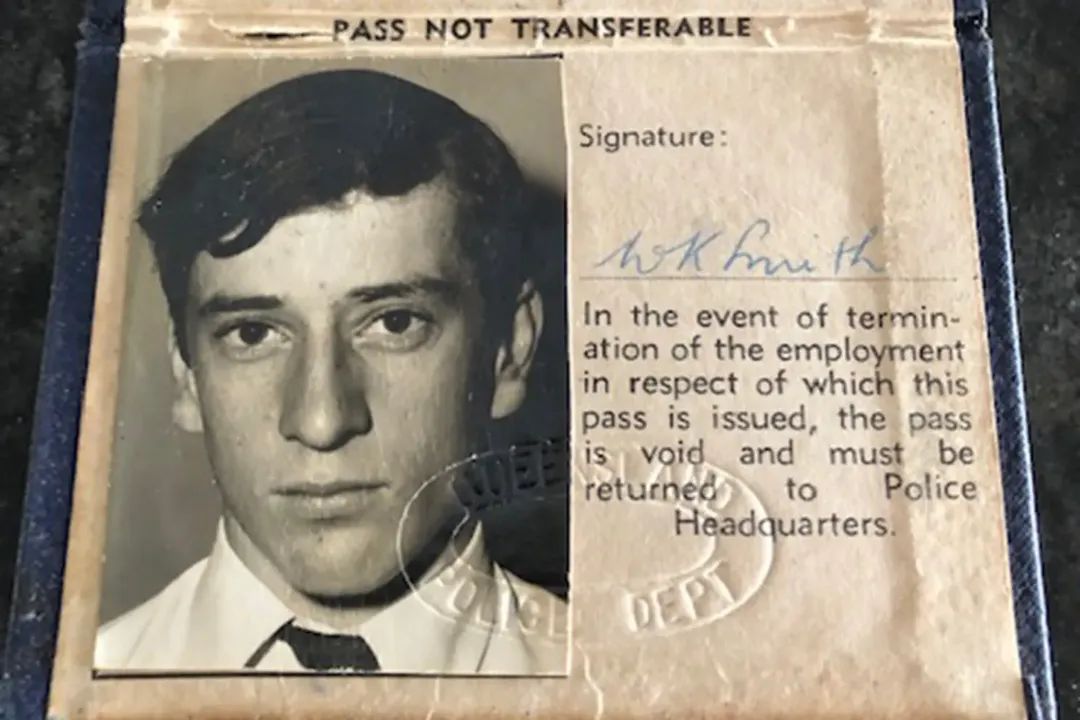
He called on the experienced O’Callaghan for an explanation as to what had happened. However, he was met with a “not a clue” as he quickly wrote down all that had transpired. This professional relationship developed into a fierce rivalry, which was all in good fun. Acquiring his first press pass through the Queensland Police in 1971, following the infamous Springbok tour, a young Smith continued to take any match assigned to him.
“My first representative match was Queensland vs the British Lions, which Queensland won!” Covering the match for AAP, Smith filed the story, never thinking very much of it. However, the story took off when it was published internationally. “The London papers ran my story the next day, and then AAP filed a reaction piece.” “So, my debut representative Queensland story had circumnavigated the globe in the space of about
twenty-four hours…, and with that, I was pretty chuffed.”
The first Test that Smith covered was Australia’s second Test match of the tour against the Springboks, which Australia lost. Smith’s four-tabloid-page match report took four copy-takers to transcribe on the other end of the phone, such was the level of detail. Smith later asked a close friend and aspiring journalist, John Mickel, a fellow SLOB, to sit beside him and help take statistics. Smith says Mickel found journalism far too tricky, and he later became the speaker of the Queensland Legislative Assembly.
Smith’s breakthrough later came in the mid-70s with the infamous ‘Battle of Ballymore’ and Queensland’s 42-4 victory over New South Wales in 1976, seeing him preside over “the dawn of Queensland Rugby”.
When quizzed on the best player he’s seen to date, Wayne wasted no time. “John Eales, I remember the first time I ever saw him playing, he was making his first grade debut for Brothers, playing number eight. I recall him taking the ball way out near his own sideline at the halfway line. He initially looked bewildered before deciding to take a field goal.”
And it was this 55m field goal that had not only journalists but Australian selectors in awe. Smith recalls turning to John Connolly, who was chairman of the Queensland selectors at the time and saying, “If you don’t pick this guy for Queensland, I’m going to have your guts for garters.”
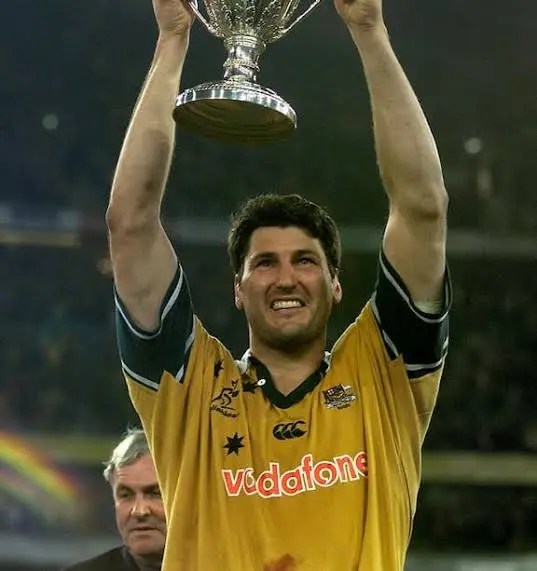
John Eales (Photo courtesy of Brett Phibbs, NZ Herald)
Fortunately for both Connolly and Queensland, Eales went on to become a legend of the game. Smith is proud to state that he was the one who broke the news to aspiring Wallabies centre Tim Horan, who was scheduled to play his first Test in 1989. “I remember ringing him to tell him he had made the Australian team, and he got quite a shock and was then quite excited by the news”.
Wayne believes that Tim, the son of SLOB Mike Horan, is the greatest centre to have played the game. Moving up the ranks at the Courier-Mail in 1993, Wayne missed coverage of the “golden era” of Australian Rugby. He returned to Rugby in 2003, writing for The Australian on a one-year contract as the specialist Rugby World Cup correspondent, where he notes, “I’m still waiting to be sent back to my previous role.”
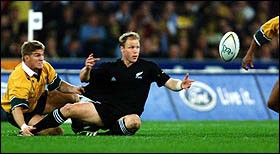
Having covered the game for fifty years, including six Rugby World Cups (1987, 2003, 2007, 2011, 2015 & 2019), none stands out more than 2007. The day before the Wallabies’ departure, then Wallabies coach John Connolly and renowned Rugby journalist Greg Growden had a “slanging match” during a press conference. “Knuckles refused to speak to Greg throughout the entire tour, and Crowdo lapped that up; it was an environment he flourished in. So for the whole campaign, he wrote scathing journalism, dooming Knuckles before the Wallabies final result!” With Stirling Mortlock lining up a kick to secure the Wallabies Finals berth, the wind sent the ball off course, and so ended Wayne’s tour. When quizzed on the future of the game? “I think Rugby is on the right track at the moment, and once we get some clear air, it’ll be great to see what happens!” Wayne’s editorial coverage of the game may go unrivalled, and he still keeps coming back for more, even now in retirement. Fairfax has scouted him to write for the Brisbane Times and Sydney Morning Herald. Wayne Smith’s intelligence and understanding of the game have had an influence on Australian rugby that cannot be underestimated.
https://images.app.goo.gl/K9bhhWBmEc5maHK77
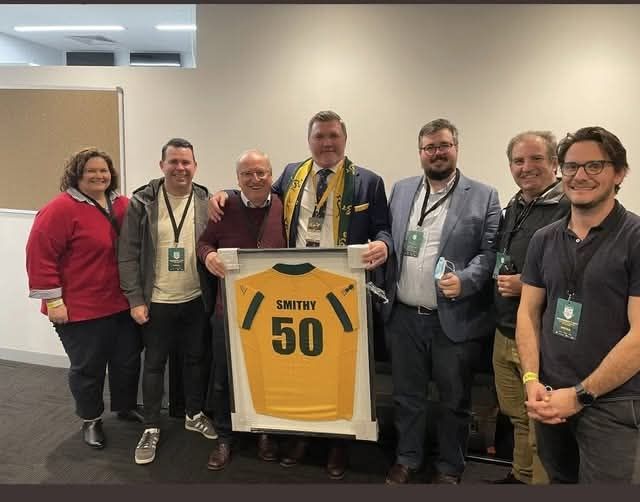
Wayne Smith’s farewell to journalism: It’s been a hell of a ride for 50 years. Something happened on Saturday night that I have spent half a century desperately trying to avoid— I got caught in a Tony Shaw bear hug. There are, it must be said, two kinds of bear hugs from the former Wallabies captain. The friendly ones and the not-so-friendly ones. But it doesn’t really matter; both are equally dangerous. The man is made of granite, still, and has no idea of his enormous strength.
So any time we met, it had always been a case of squaring my shoulders, setting my jaw, looking him right in the eye and giving him a good manly handshake. I thought if I kept it prim and proper, I might stand a chance. That, indeed, was how it went in the elevator at Suncorp Stadium on Saturday night as we made our way up, me to the press box, him to his seats. He was wishing me well in my retirement, and then, with a shake of my hand, he was out the door and seemingly gone. But then I heard him say “Not good enough!” and before I had time to even think, let alone move, he filled the doorway again, and I found myself wrapped in a bear-hug. God, it felt good! But that was also the moment when it all came crashing down on me that this wonderful adventure I have been on for the past half-century was about to end. This is my final day. This is my farewell column. The momentary panic subsided, and I began to take stock rationally. All of those concerns are pure rugby concerns. Until quite recently, I had pinned my hopes for the game’s survival on the ordinary men and women who, from week to week, make it run.
Peter “Doubles” Daley is a mate of mine, and I trust you will indulge me just a little, but it is people like him who ensure rugby has a future. Doubles was four years behind me in school, which should have made him invisible. Somehow, he wasn’t, and then he became entangled with Souths Rugby Club and is now virtually indistinguishable from it. Say “Souths” and people think of Doubles. Say “Doubles” and people
instantly think of Souths. Suffice it to say that after a lifetime of work, Doubles was honoured recently with the Australian Sports Medal and Rugby Australia’s volunteer award. It was a long-overdue tribute and possibly a chance for him to bow out gracefully. But Doubles took it in his stride and soldiered on, unfailingly. These days, I get regular calls from him — from a hospital room while he is waiting for chemo. He may be an extreme example, but across the country, there are thousands just like him, working away anonymously.
Hopefully, now that I will have more time on my hands, I will become one of them. I had hoped today to write at length about my other two great sporting loves, which I covered at the highest level, swimming and, as a consequence, the Olympic Games. Both have given me immeasurable pleasure and if I have performed no other service over the last 50 years, I take enormous pride in writing the column which first suggested that Brisbane bid for the 2032 Olympics. Then I gave it a push down the slope by ringing all the mayors of the adjoining councils and convincing them to back it too. But, just as I have done such a lousy job of disguising the fact that the Queensland Reds are my team, I have also failed to hide the fact that rugby is my sporting love. I was there at Eden Park the night Australia surrendered the Bledisloe Cup in 2003, and I was hoping to be there the night they won it back. Now, when that happens, I will be there as a paying spectator. But I do believe it will happen, and soon.
Thank you for everything. I really did need that hug. Goodbye.
This article was written largely by John Dinnen (SLOB 1978).

